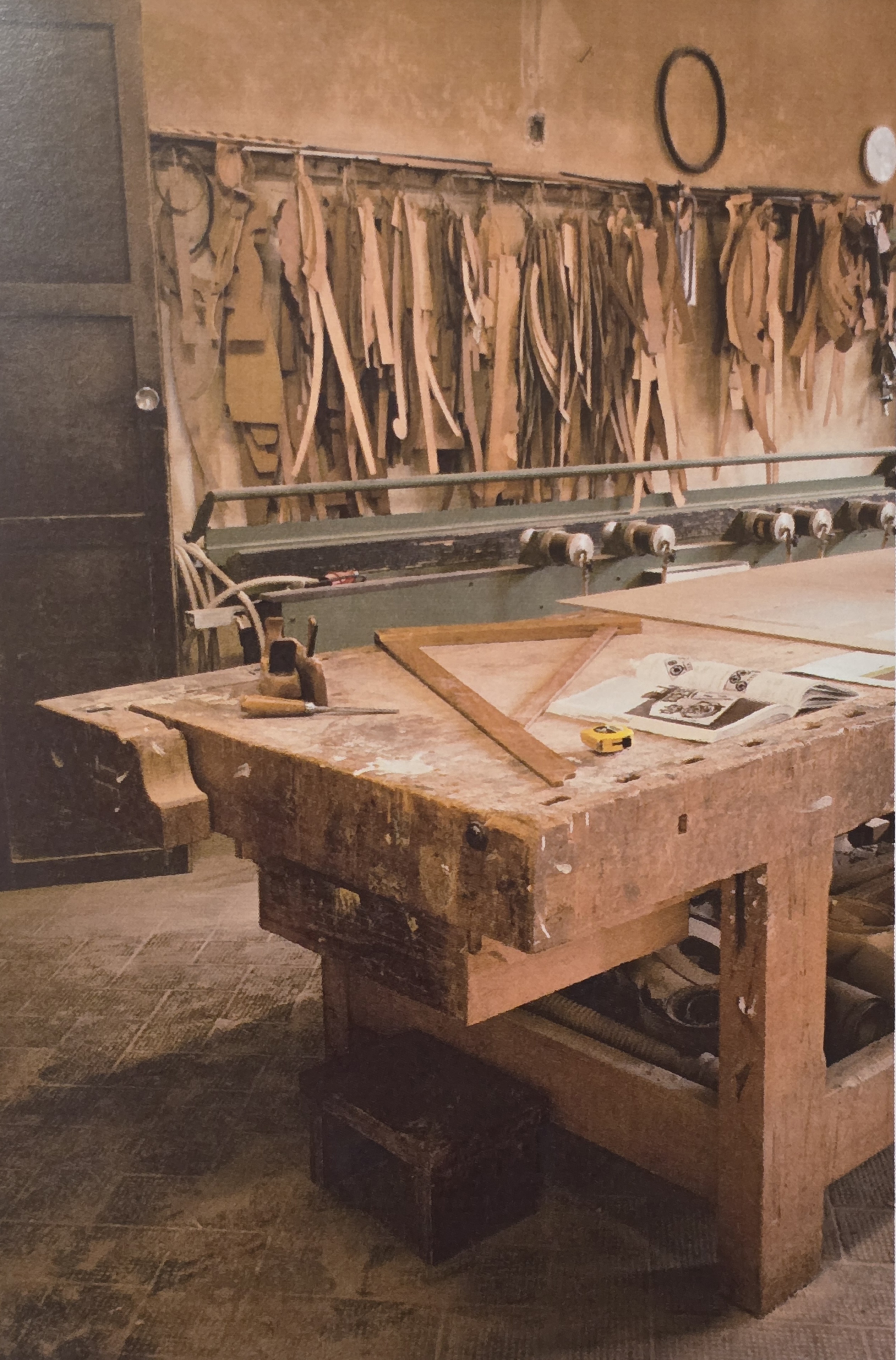
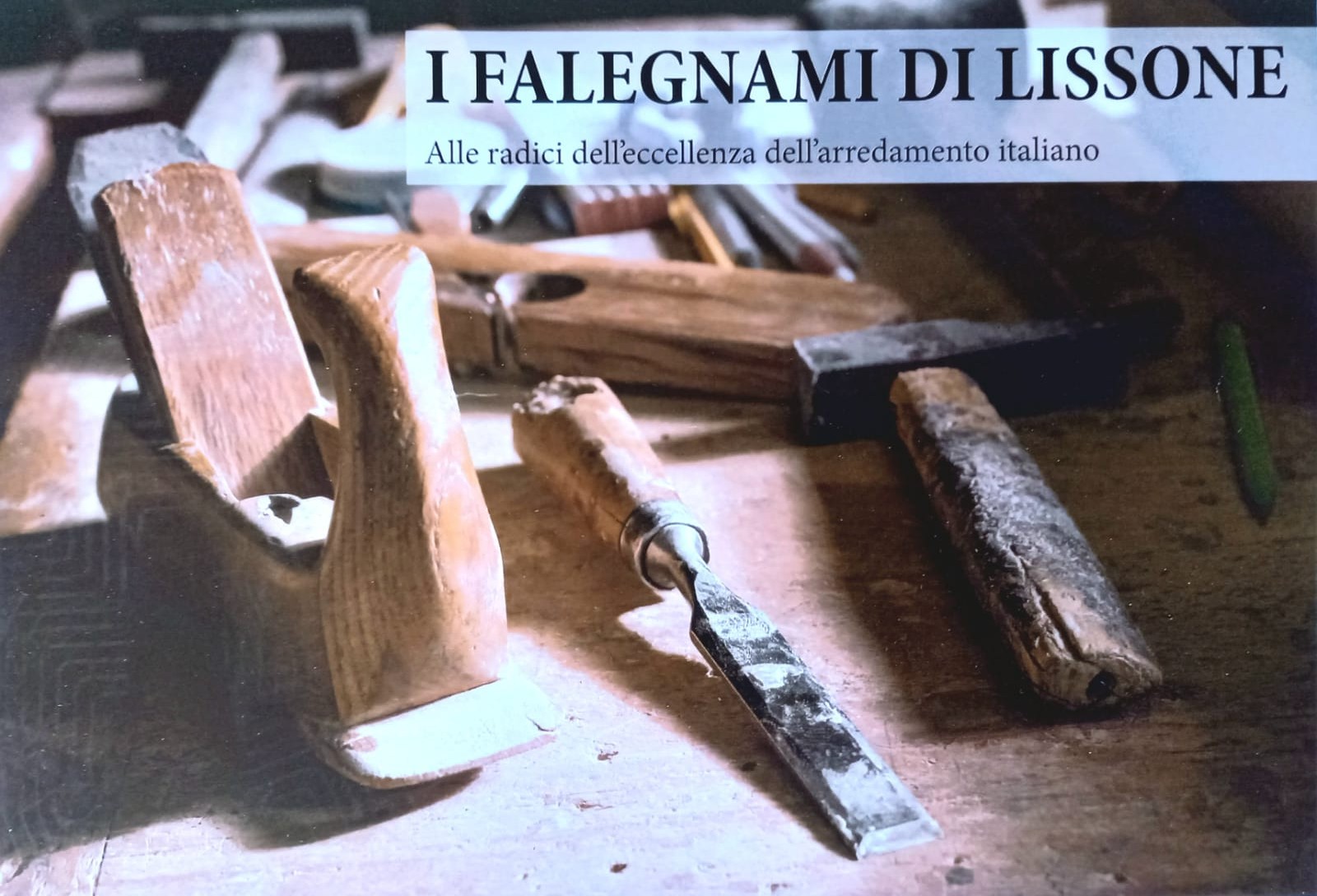
Table inside a Bötega Photograph by: Sebastiano Erras.
In the exhibition hall, certificates, diplomas and documentation of the productive activities, schools, events and personalities that characterised Lissone up to 1970 were displayed.
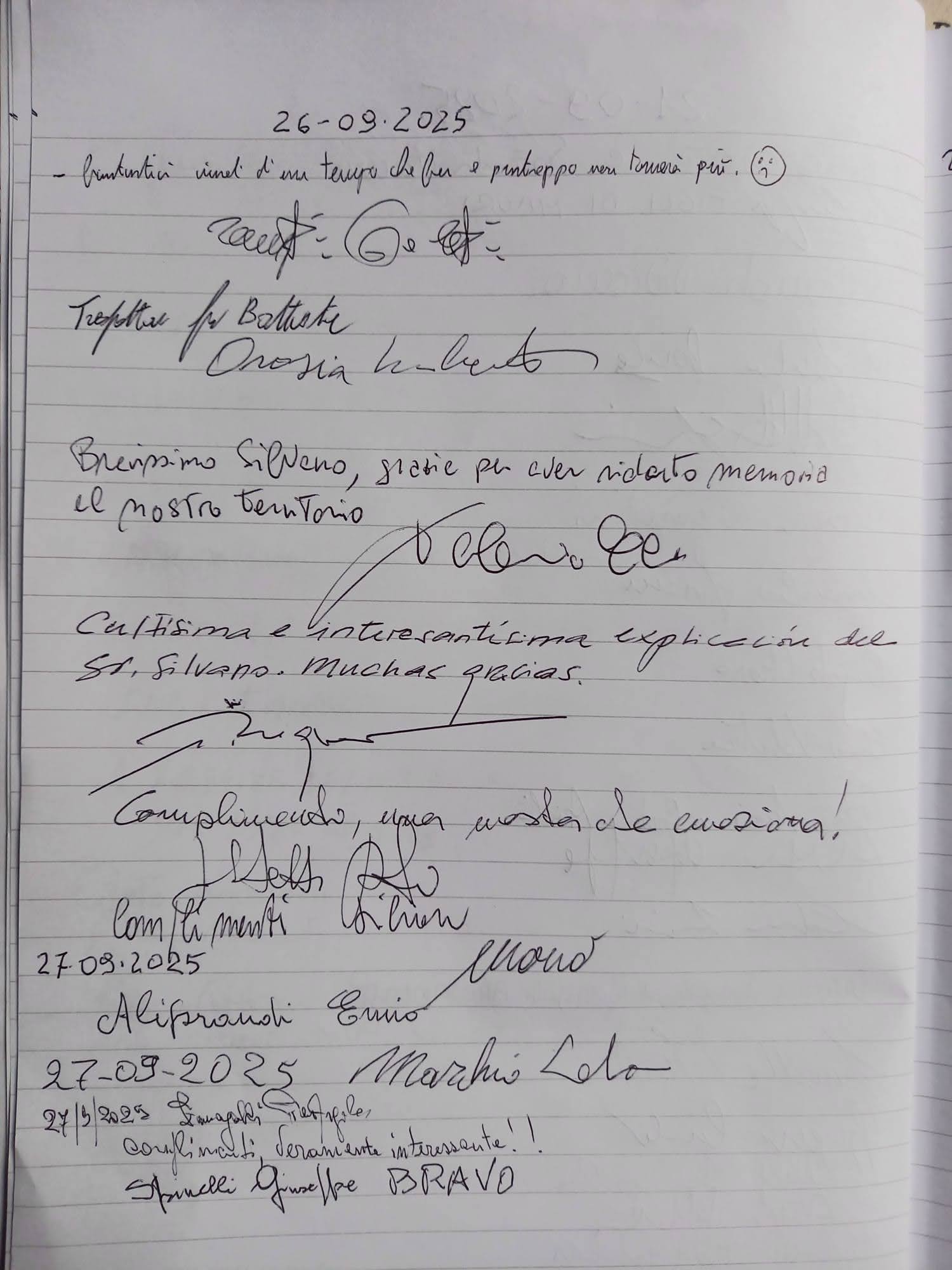
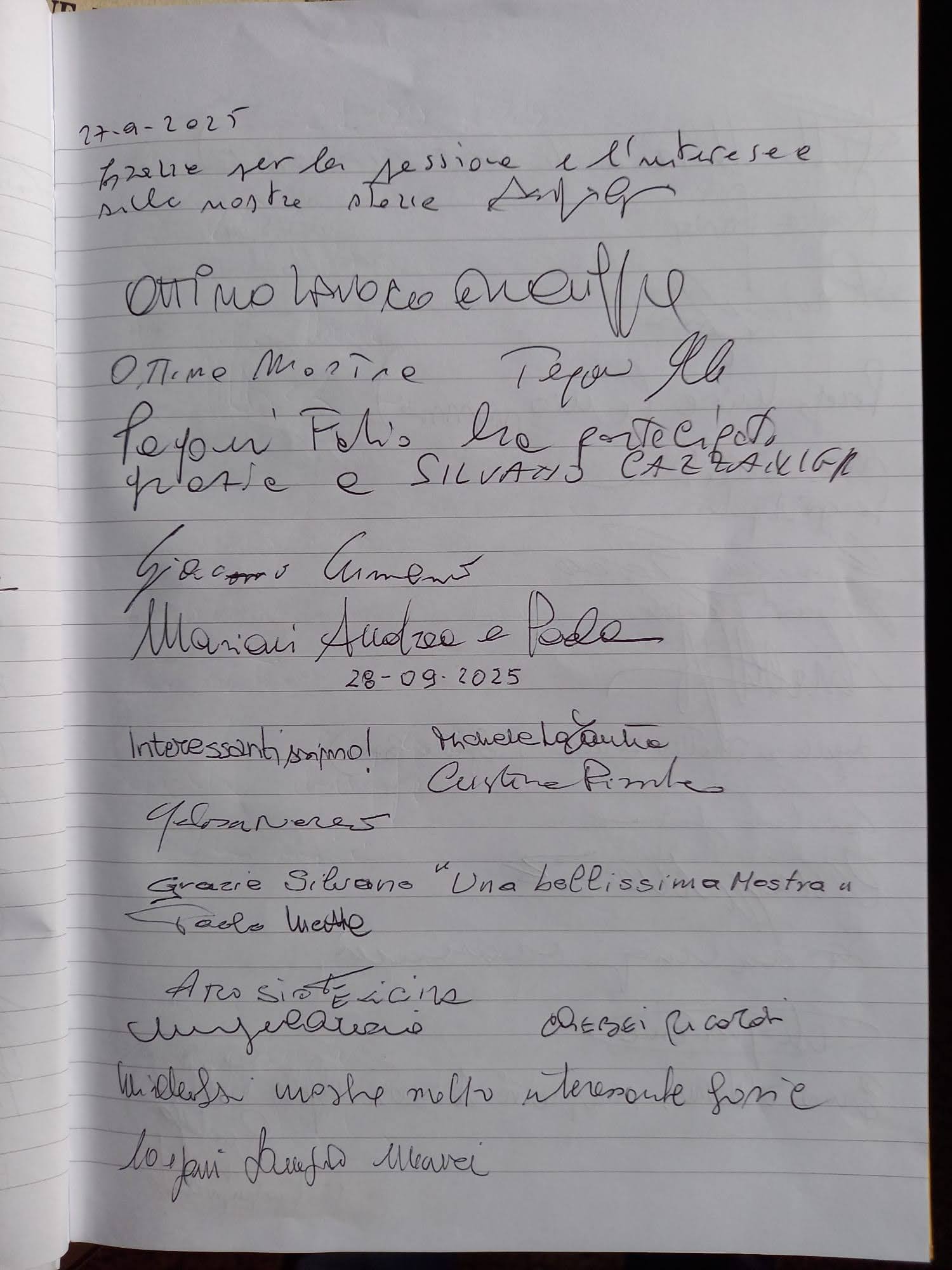
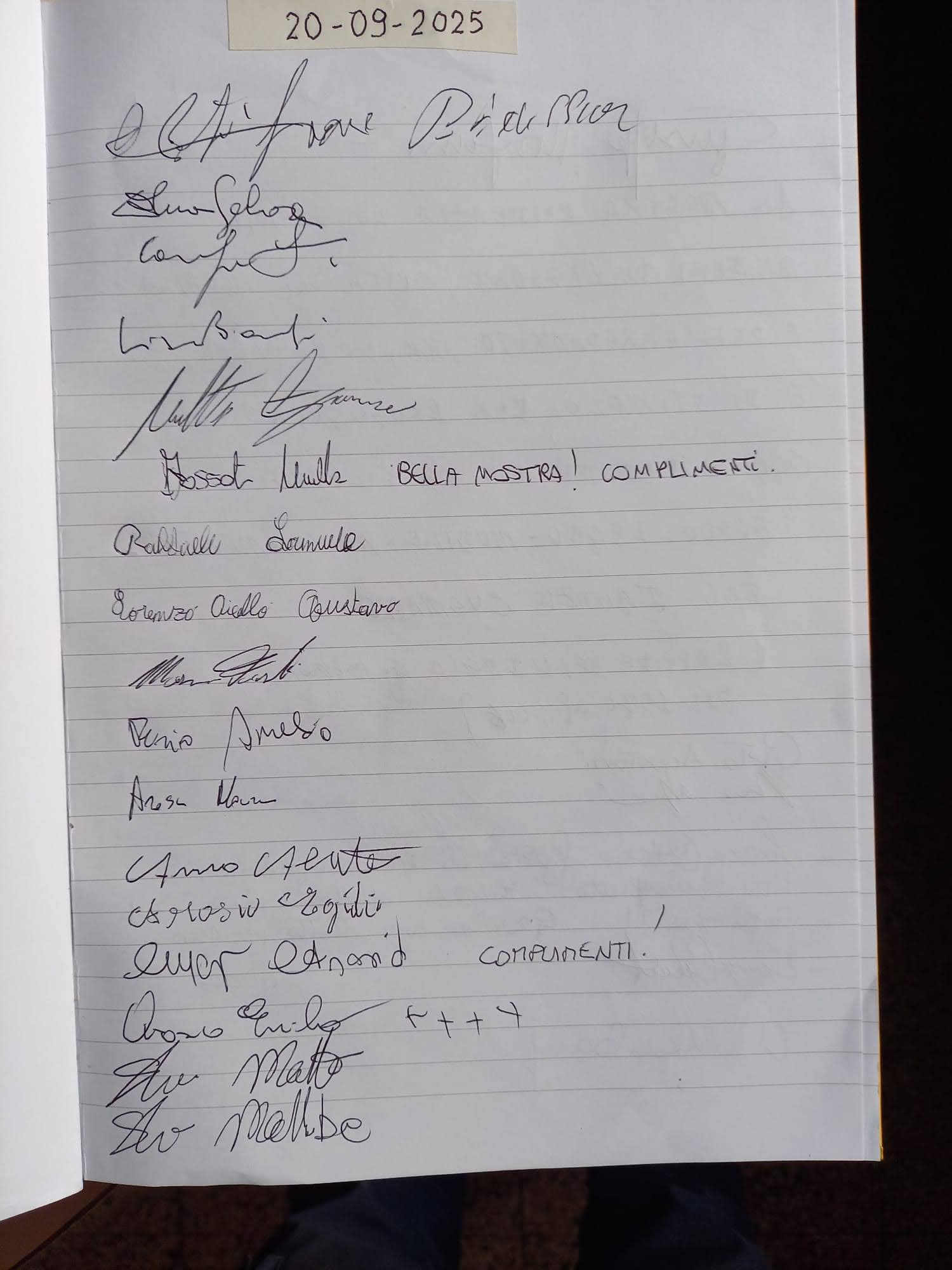
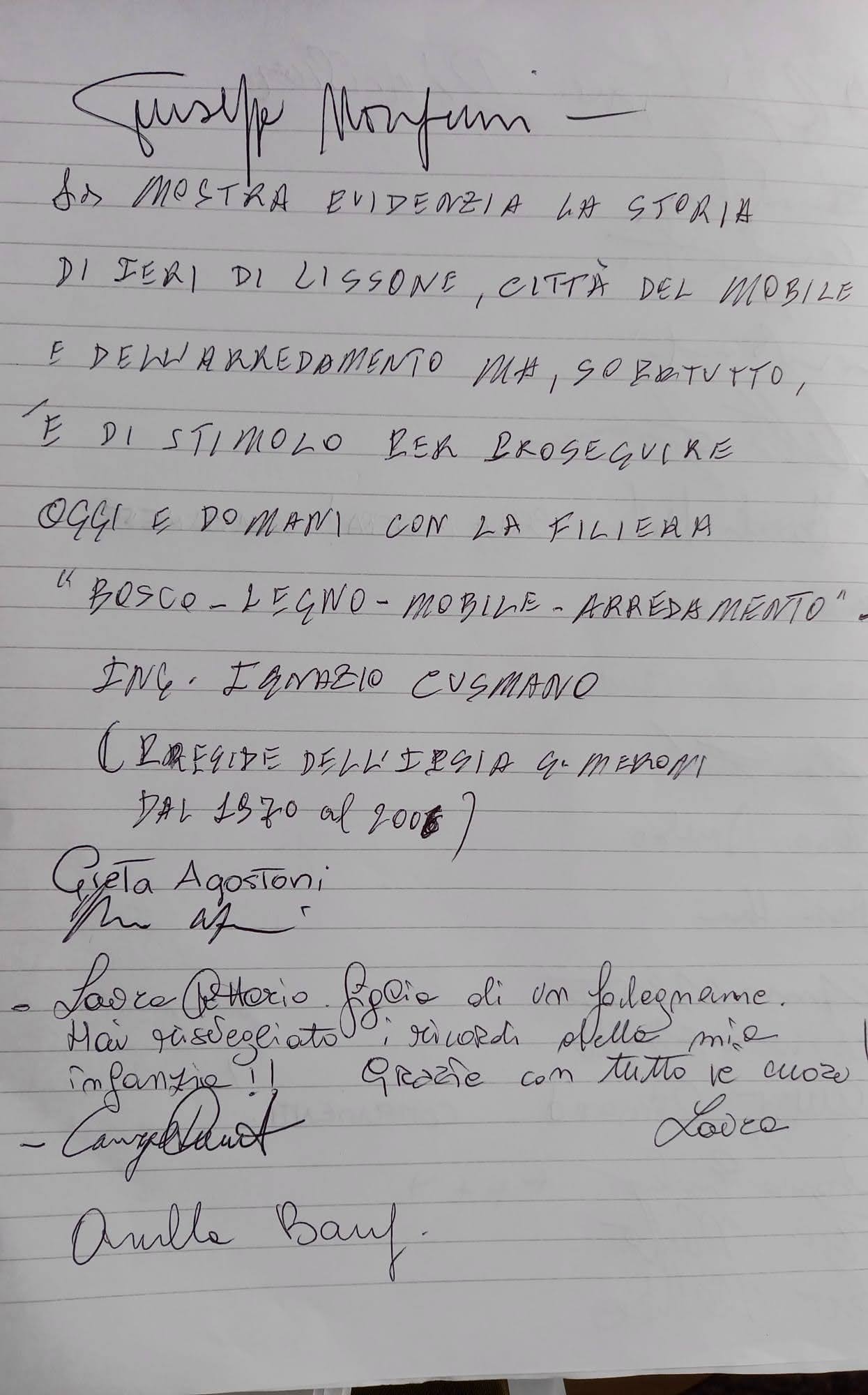
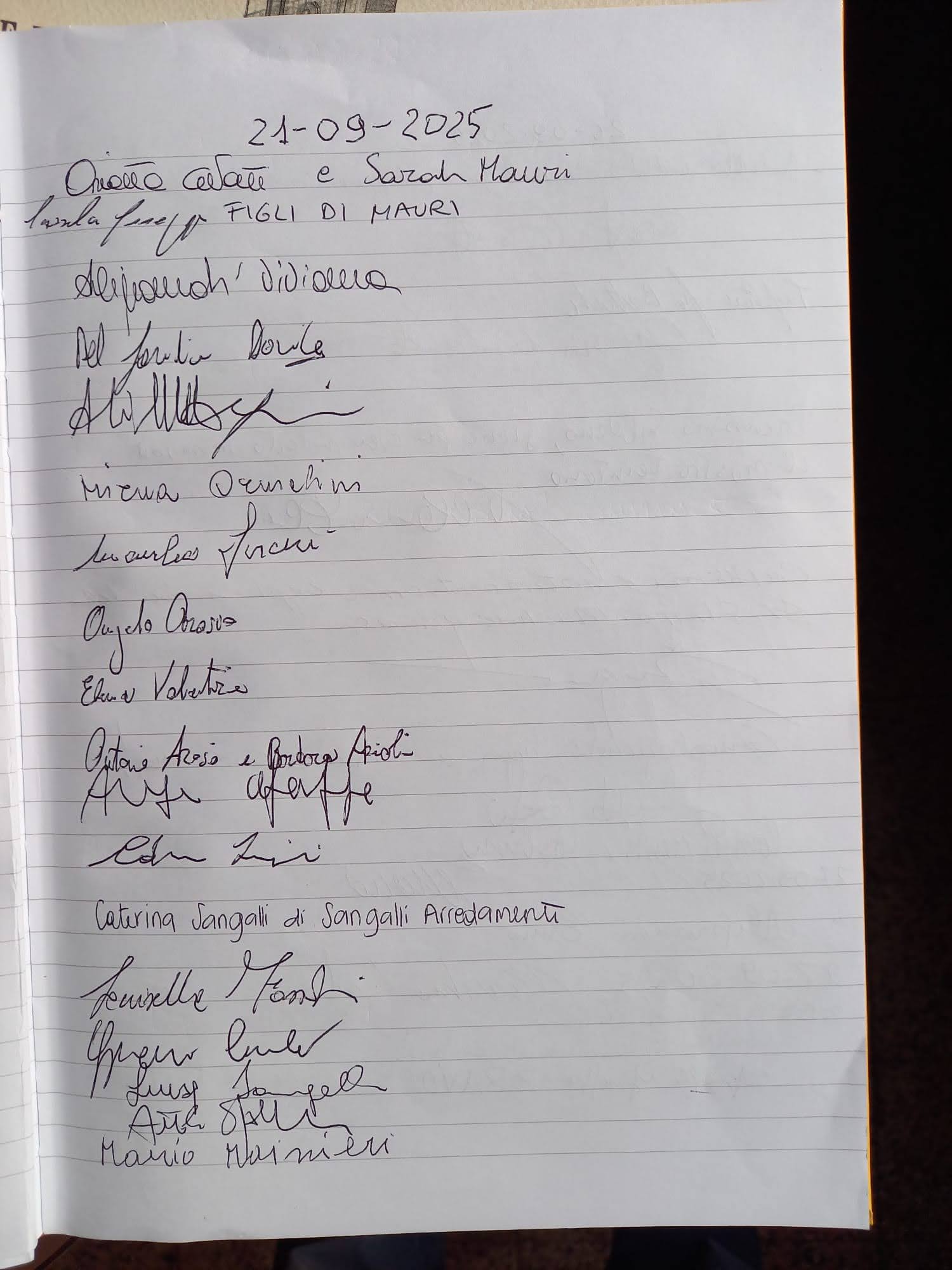
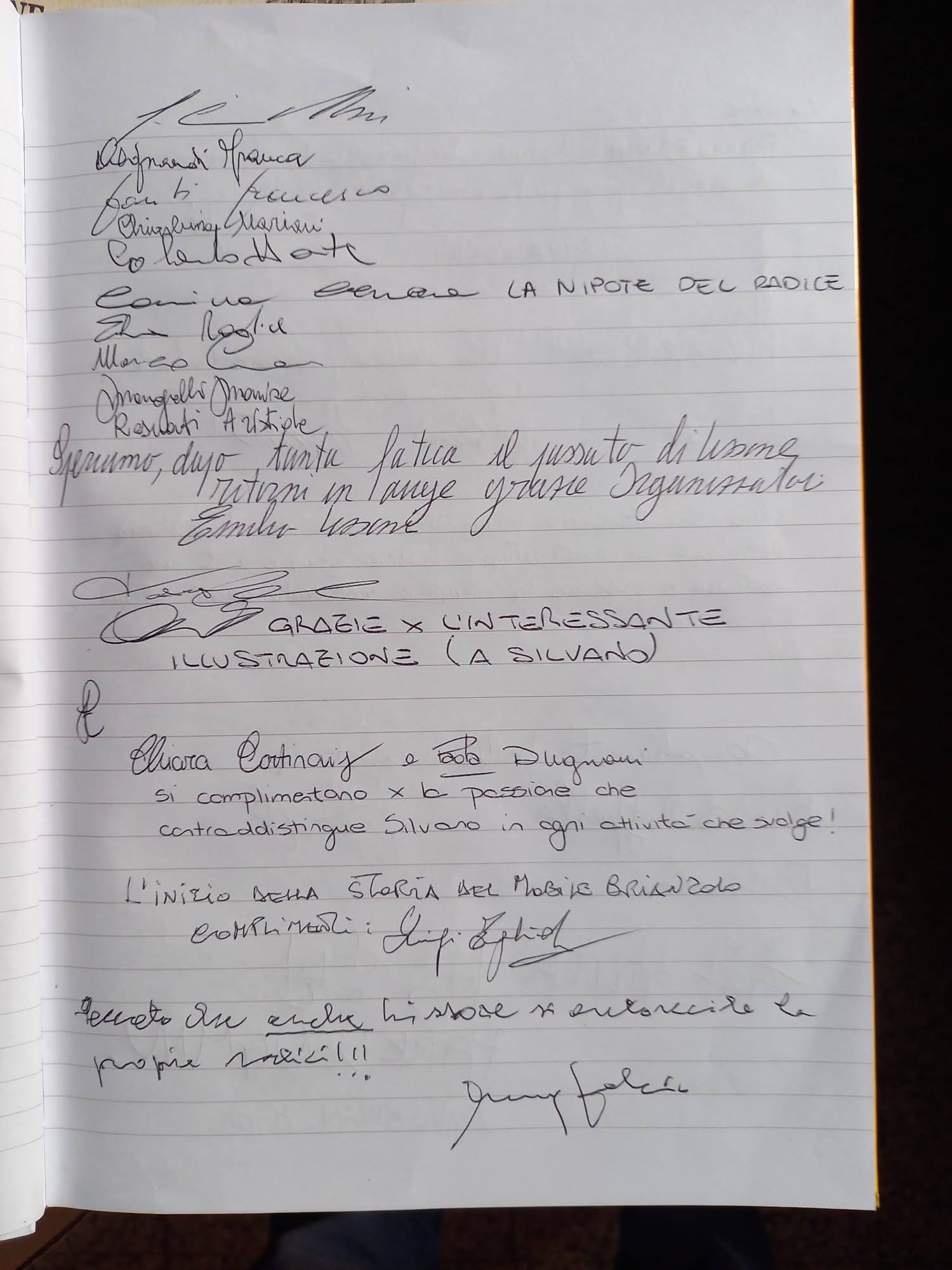
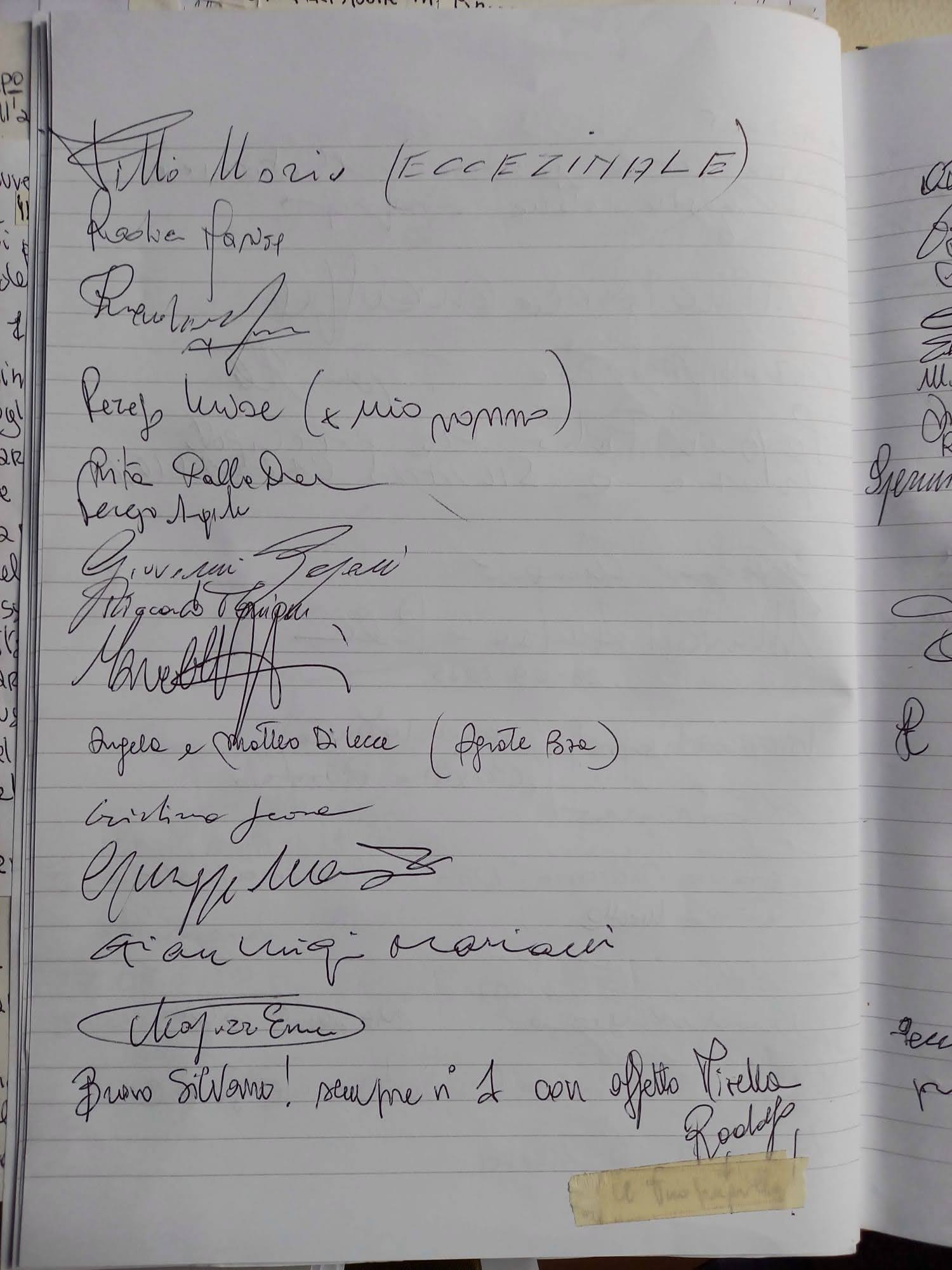
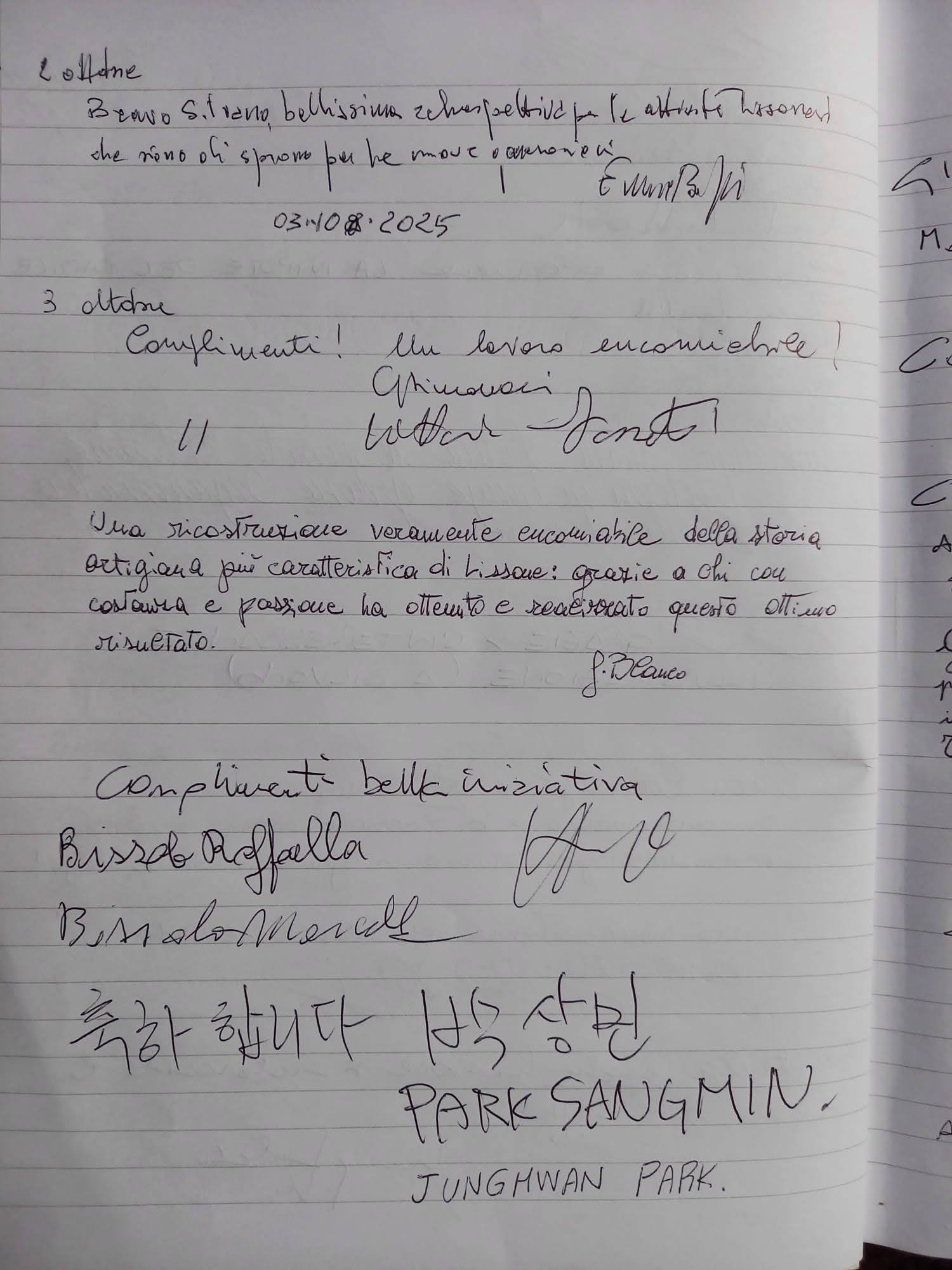
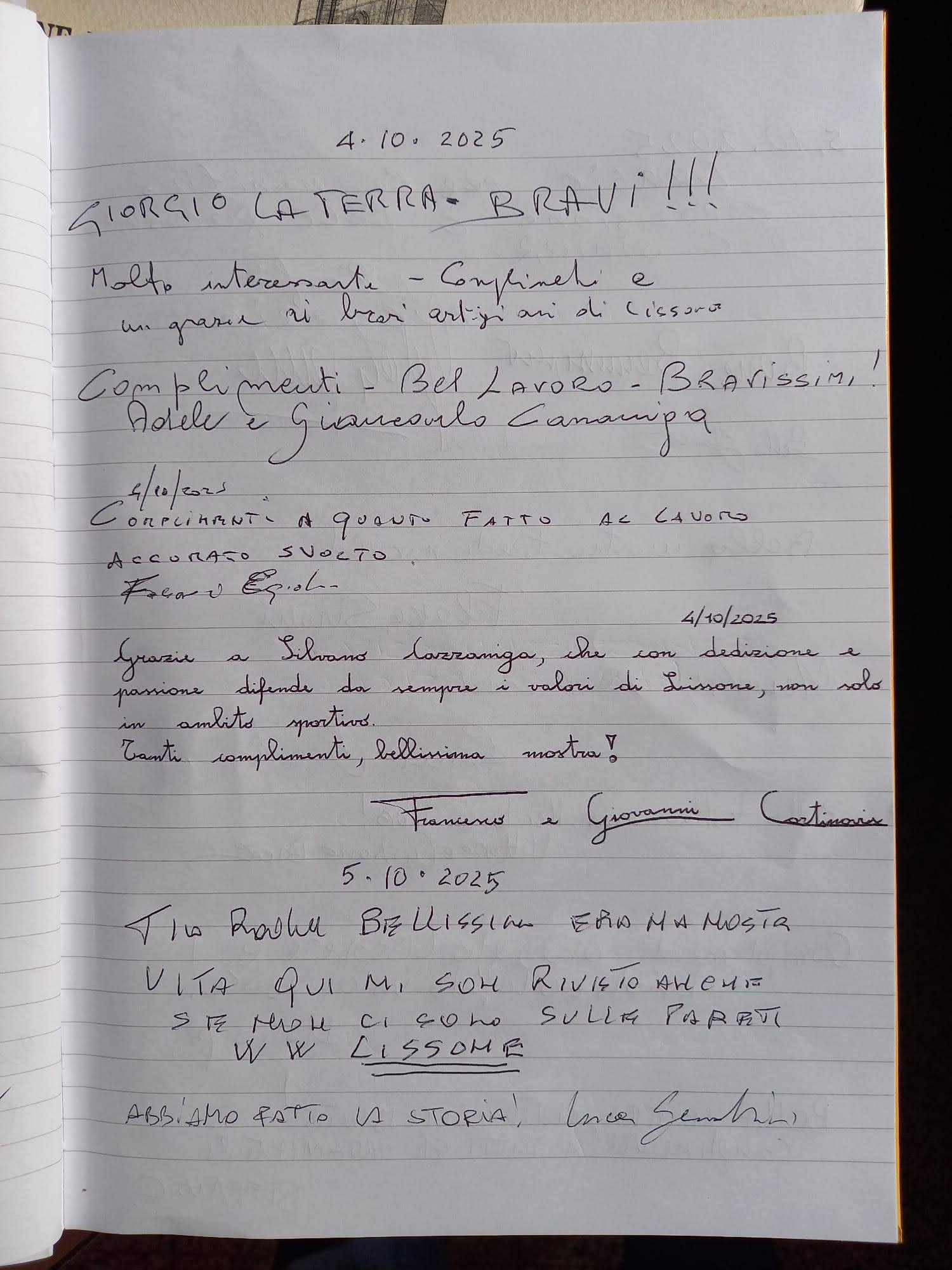
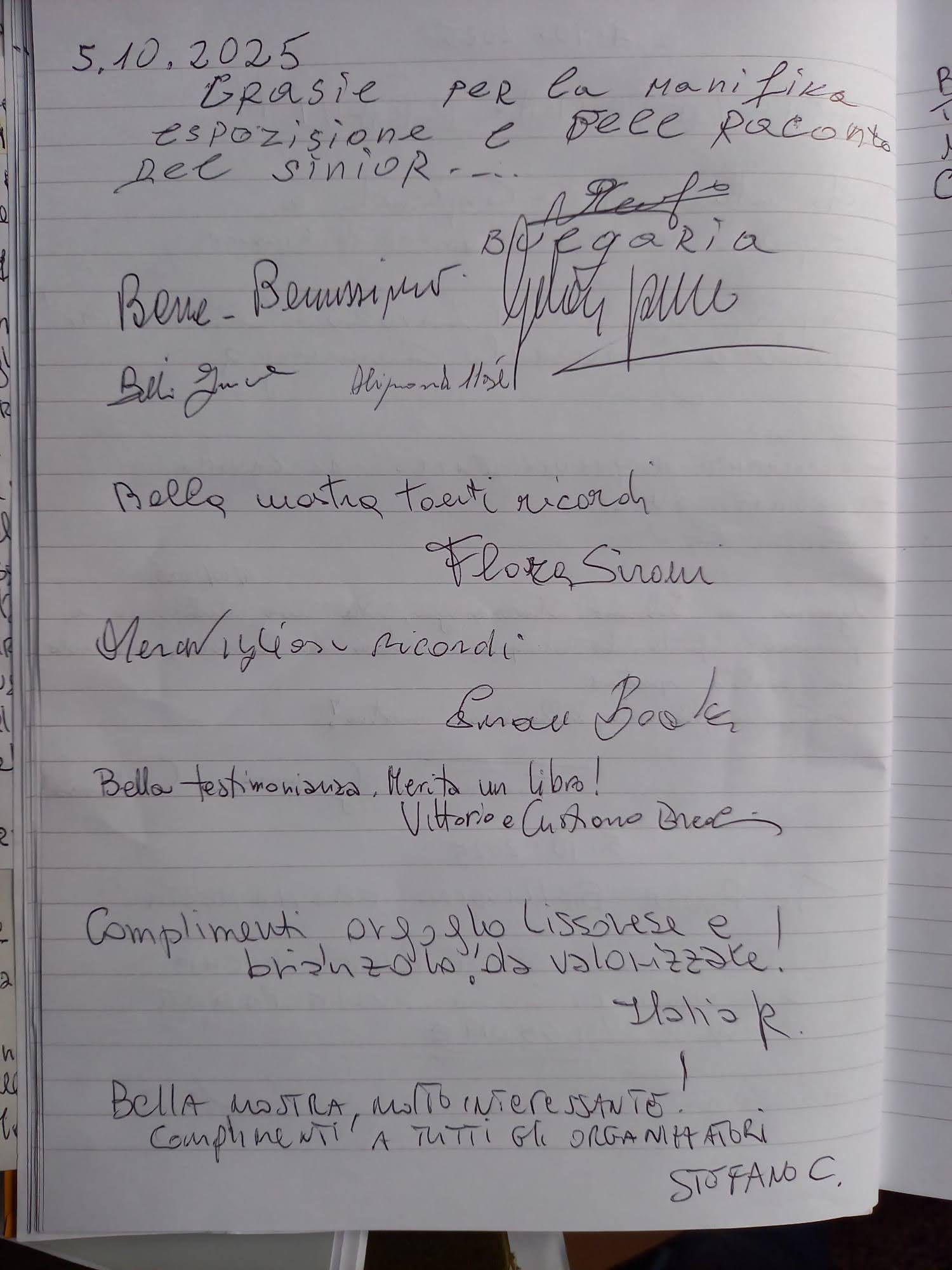
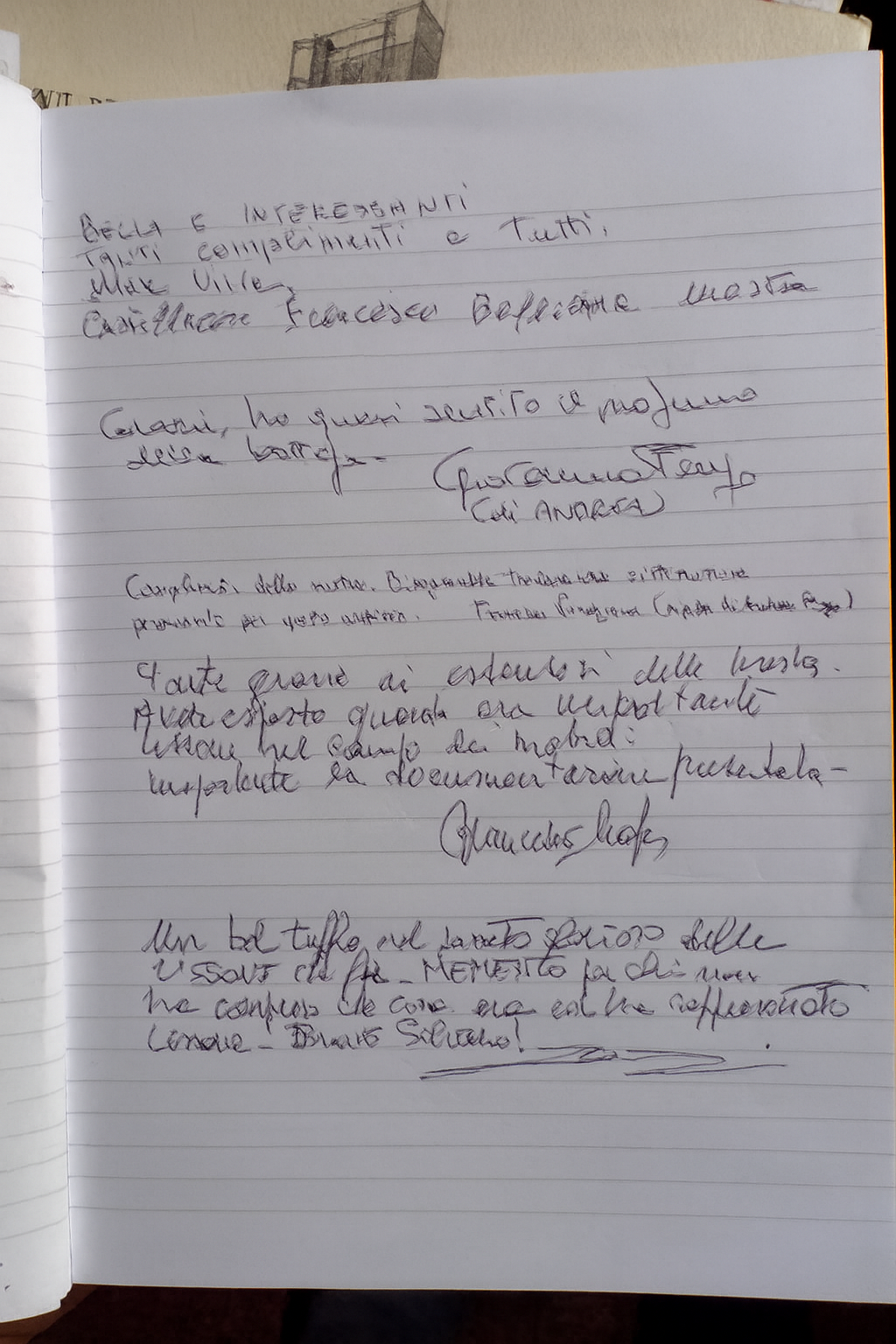
The exhibition was very successful, with numerous visitors who also left praise in the guestbook.
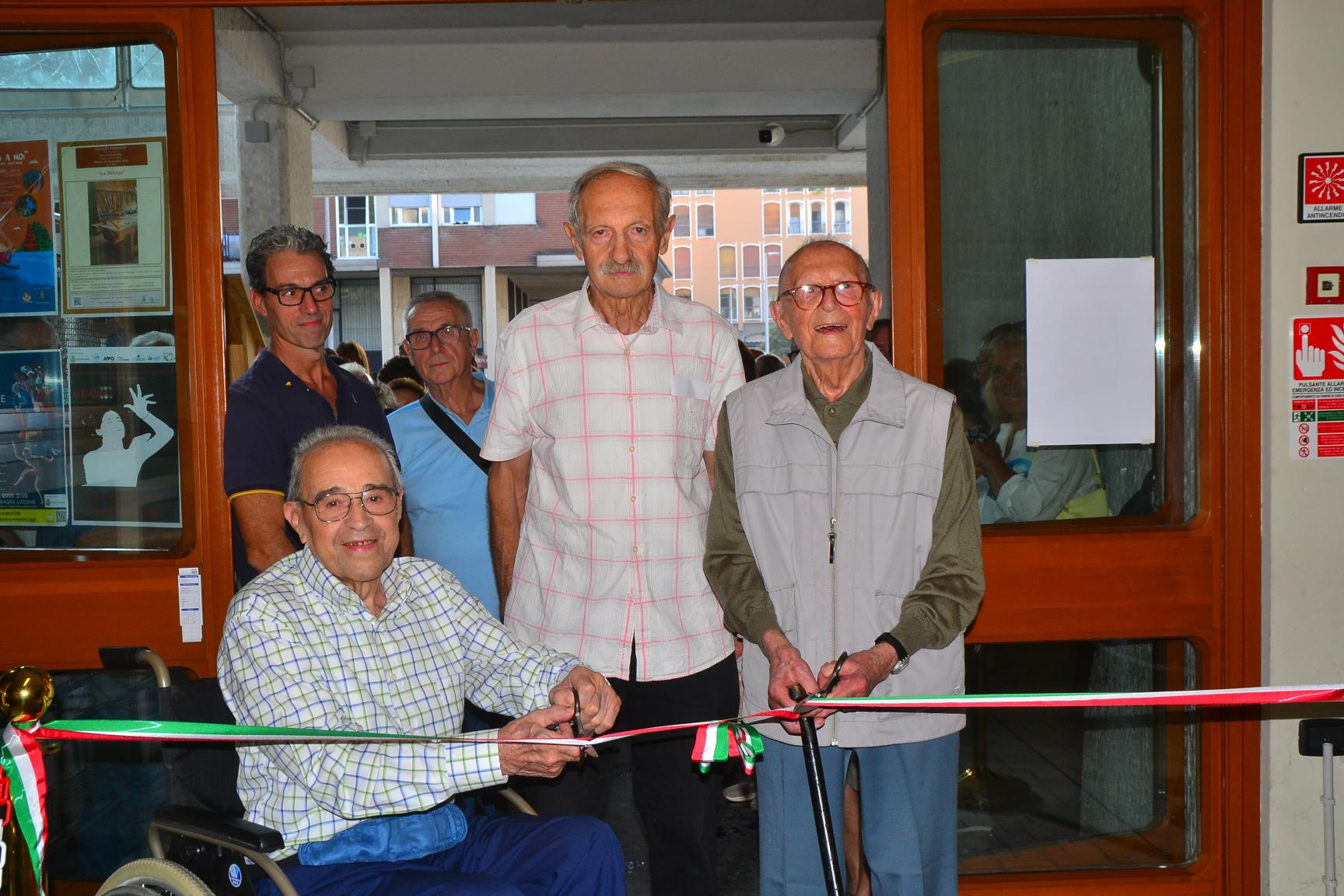
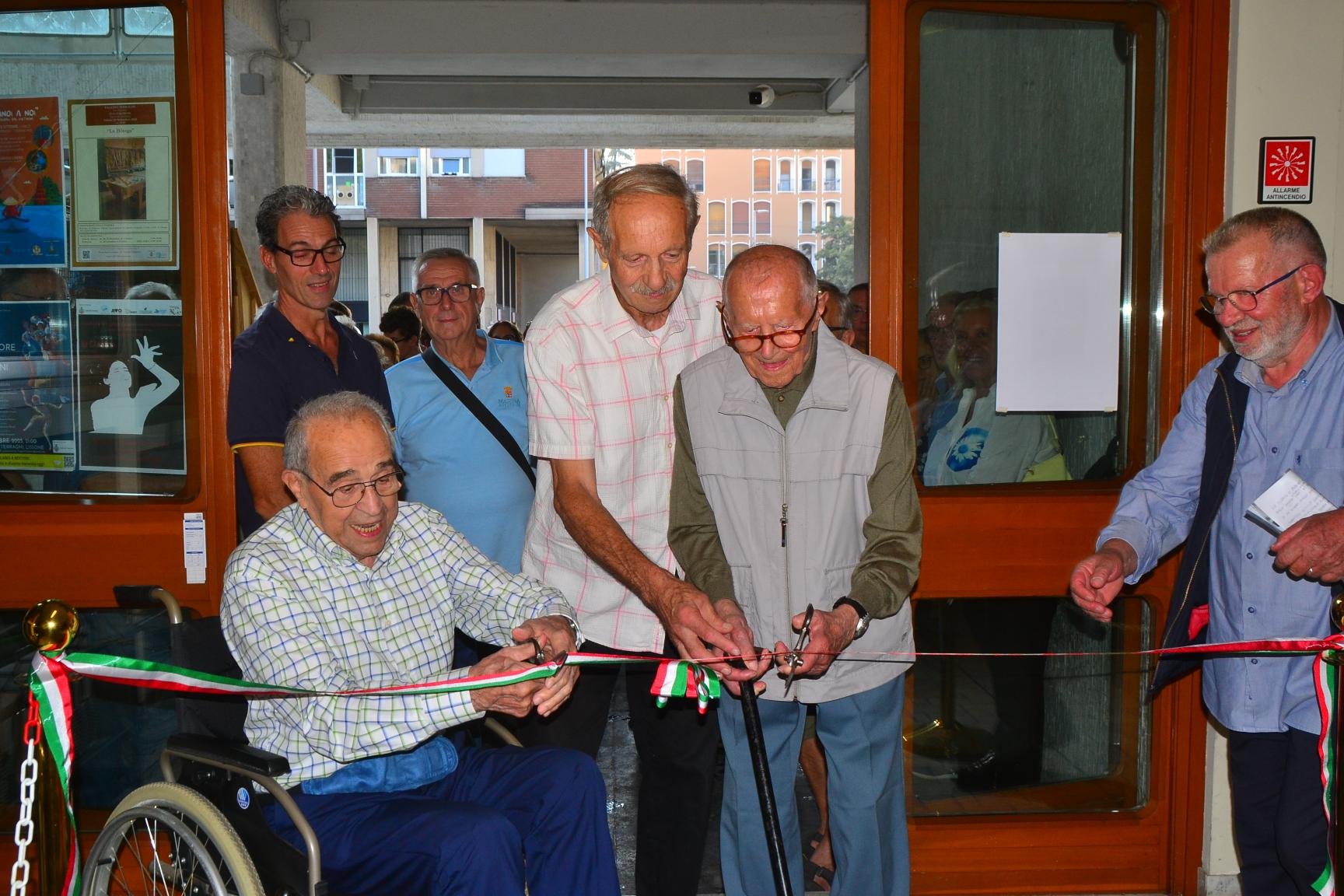
Ribbon Cutting at the Inauguration
Arosio Egidio (Bumben) Born in 1926, after working in his father's workshop, he set up on his own in 1954. Today his business has been passed on to his son Maurizio.
Bumben is a historic family of Lissone.
In the workshop of the family patriarch, equipped with the first woodworking machines — band saws and planers — carpenters would come for the initial processing of the boards.
The boards were cut and squared to the sizes needed for building the furniture to be made — "la bötega del pesegot".
Zappa Pierino (Sacrista) Born in 1925,
he began working with his brother-in-law in the early 1950s in the large courtyard of Santa Margherita, where there is also the chapel church. He would help the celebrant during religious ceremonies, hence the nickname Sacrista. After the mid-1950s he set up on his own and purchased one of the first sheet presses, machines designed for veneering curved pieces. He then started a subcontracting business not only for the 17 workshops in the hamlets but also in Lissone, where craftsmen would bring their panels by tricycle to his workshop. He went into partnership with the brothers Giulio and Attilio. Always keen to expand his business by purchasing new machinery. Currently the business is carried on by his son Pierluigi and grandson Roberto.
Despite his age, he still drops by from time to time to see the production activity.
Photographs by: Gianni Radaelli of Lissone
Testimonies of the vitality of a town that, despite being near the great cities of Monza and Milan, managed to be in the spotlight not only of local, provincial and regional media, but above all of national, European and intercontinental ones.
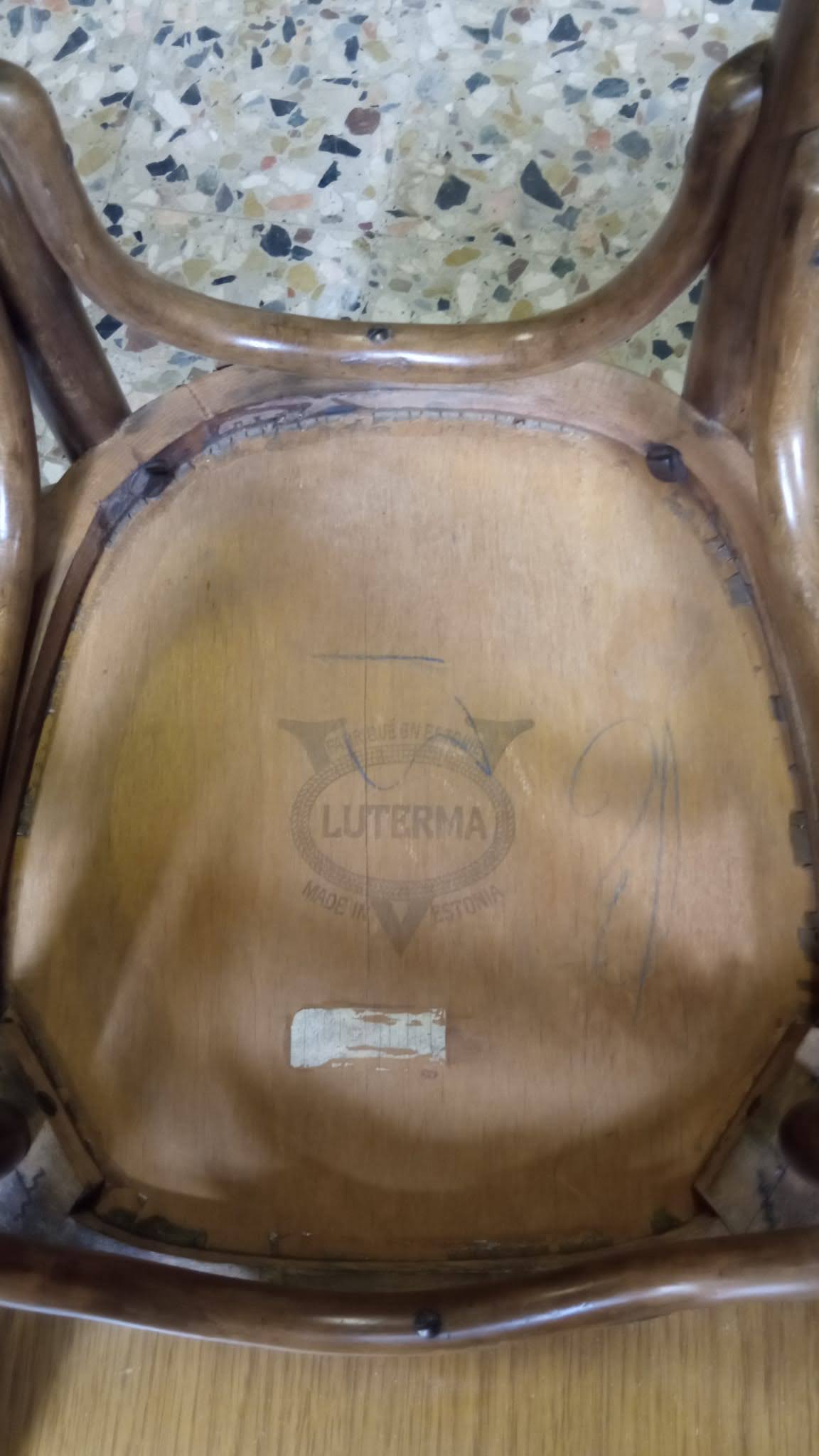
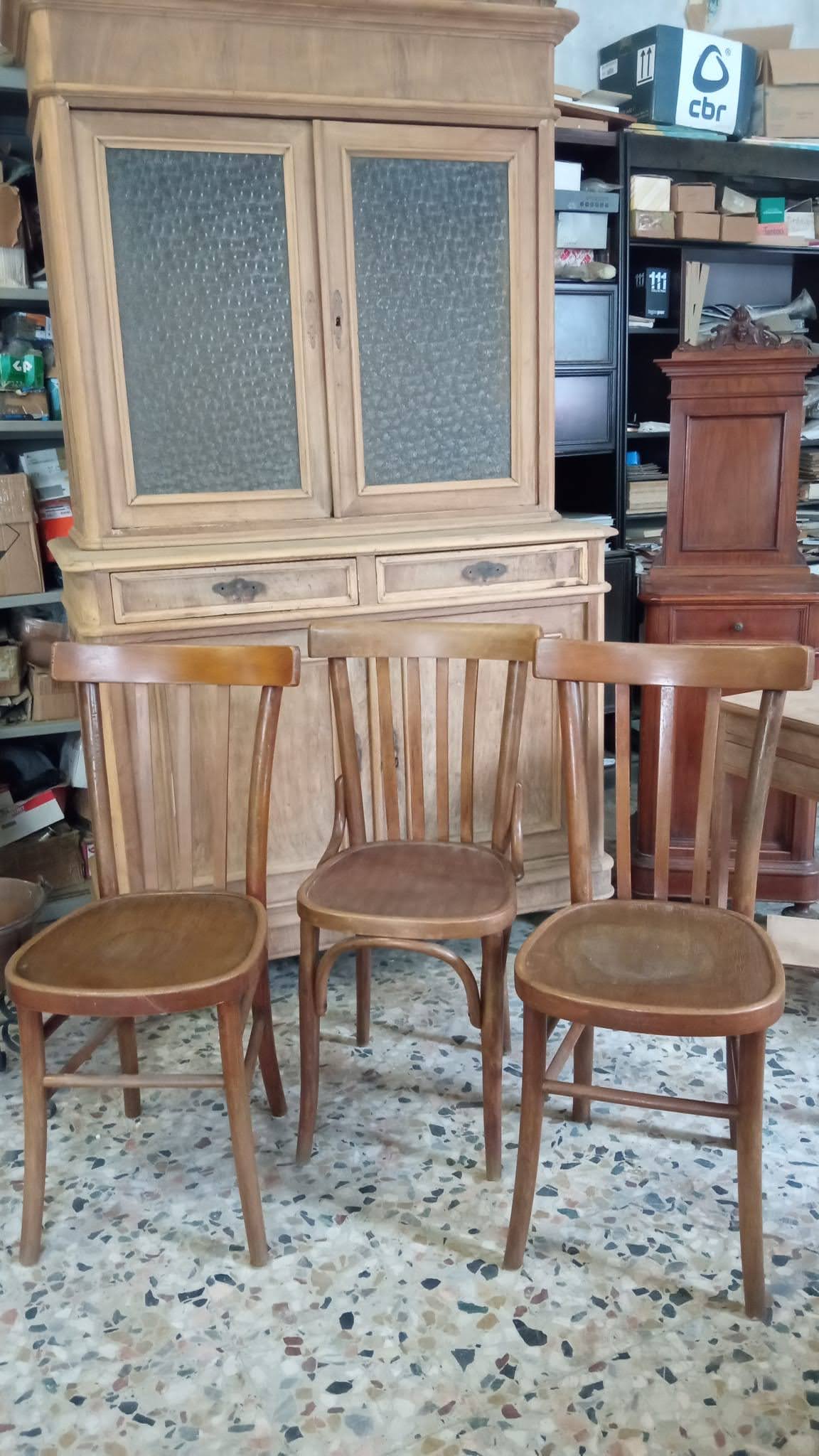
Luterma chairs with walnut sideboard by the firm Dassi Ignazio e C. Luterma is among the largest European sawmills producing tables and chairs; in 1907 it partnered with Carlo De Capitani. From their collaboration, plywood was born, which would be used in furniture production. In the following decades, it would revolutionise the technology of furniture construction.
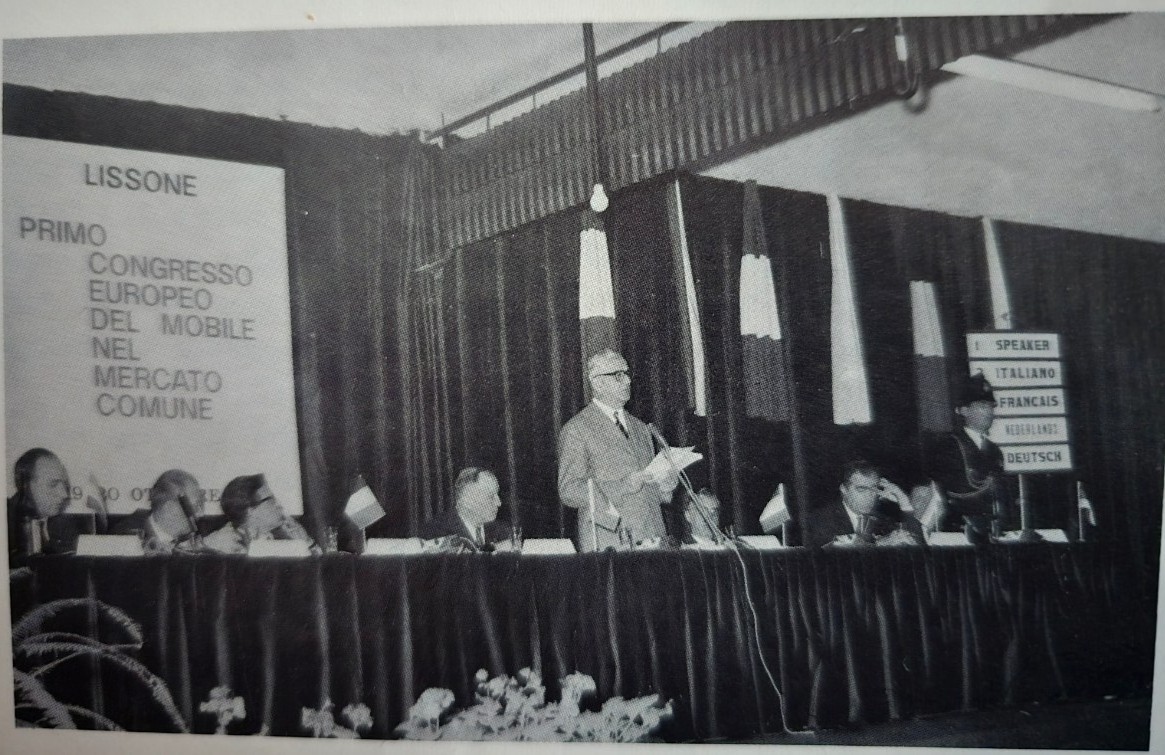
First European Furniture Congress in the Common Market, Lissone 1963
Not only the usual names of large firms come to light, but also those who, with their skills and dedication to their craft, formed the fundamental foundation of Lissone's furniture industry long before the era of Made in Italy.
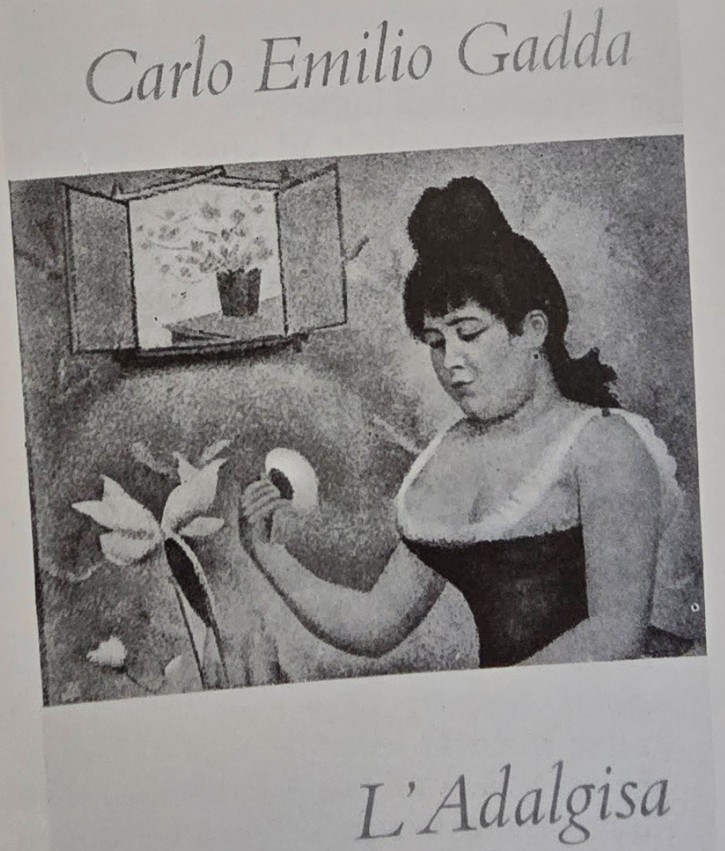
Adalgisa del Gadda marries the mayor and brings as her dowry the "Lissone room", the desire of all young women of the time who were getting married
What has been exhibited, accompanied by simple and brief comments, while being aware that it is only a small piece of documentation — considering that in 1955 there were more than 2,000 artisan businesses in the furniture and furnishing sector operating in Lissone — can give the visitor an idea of the vitality that characterised Lissone for several centuries and allowed it to be a protagonist on the world furniture market.
A reality that today may seem like a dream and that some people think is an exaggeration. The beginning can be traced back four centuries before 1571, with the suppression of the Order of the Humiliati by Pope Pius V and the dismissal of the parish priest. As the new parish priest of Lissone, Cardinal Carlo Borromeo sent Don Giovanni Battista Confalonieri.
Even before taking up his official appointment on 7 March 1570, on 2 February 1570 he began keeping parish registers of births, deaths and marriages, and from that date there are certain records of civil registration.
Don Confalonieri dedicated his work not only to religion but to educating the population, especially the less affluent classes. By educating a largely illiterate and semi-illiterate population, making them aware of their own abilities and rights from those years on. The church became a fundamental reference point for the population; a decade after his death (1599), events occurred that highlighted the maturity and confidence acquired by the working world of Lissone.
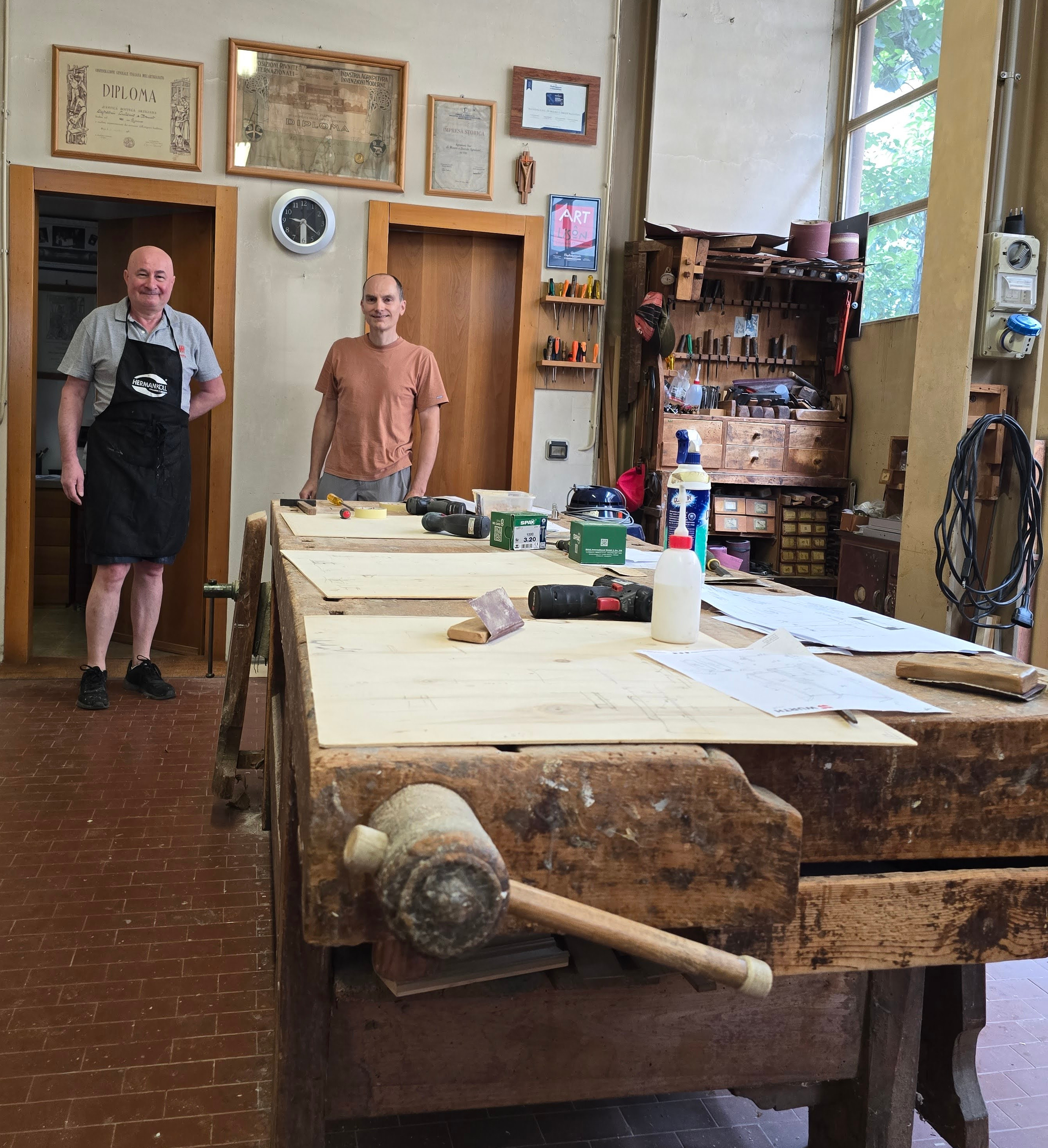
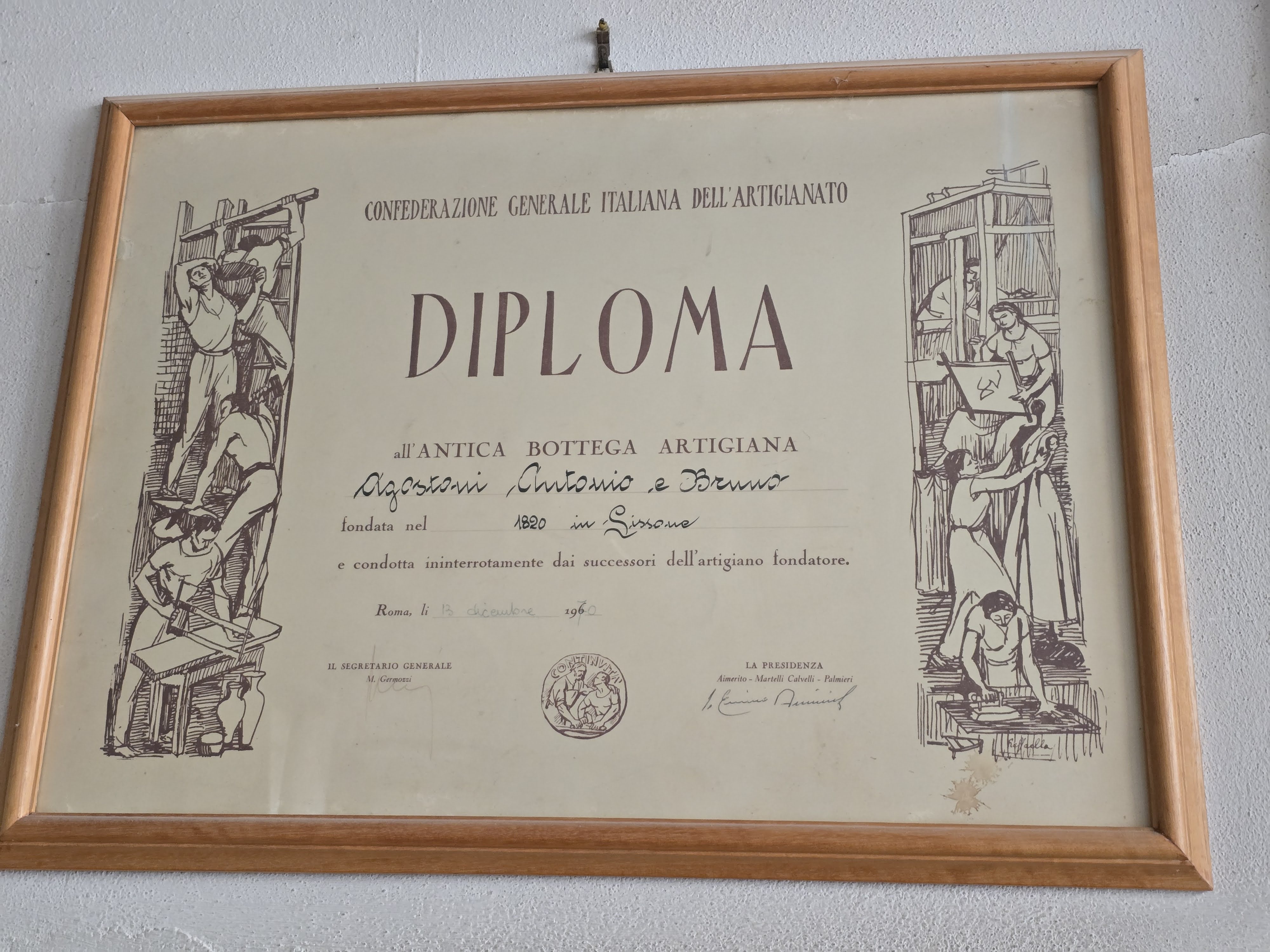
Agostoni firm. The Bötega with the most years of activity, currently run by cousins Mauro and Davide
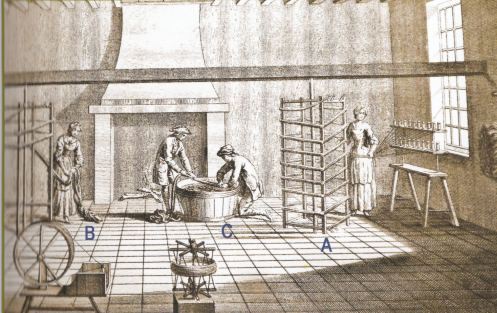
Plate on wool processing, from the Encyclopédie by Diderot and d'Alembert, Paris 1751-1772.
Two are the productive activities
that have brought Lissone to prominence:
THE WOOL MARKET
and
THE FURNITURE MARKET
Photograph by: Sebastiano Erras.
THE PROCESSING OF WOOLLEN CLOTH
The processing of woollen cloth began in the 1300s with a number of looms given to some families of their confraternity in Lissone by the friars of the Order of the Humiliati.
The skill demonstrated by these families in the processing led the friars to increase the number of looms provided, involving other families.
In 1570 the order of friars was excommunicated.
At the beginning of the same year, the parish priest of Lissone was dismissed. In his place, Giovanni Battista Confalonieri (1570-1599) was appointed as parish priest, even before his official entry as parish priest (7 March 1570).
On 2 February 1570 he began keeping parish registers of births, deaths and marriages (from that day there are certain records of civil registration in Lissone).
His activity was not limited to spreading Christian teachings; he devoted himself to educating the population with particular attention to the less affluent classes. The clergy became the most important reference point for the social fabric of Lissone.
The dissolution of the Order of the Humiliati caused no damage to the wool cloth processing activity. The number of looms operating in Lissone was significant, as certified by the census of 14 May 1613, which counted 110.
Comparing these figures with those recorded in Muggiò (13), Vedano (11) and Nova Milanese (6) highlights the importance of Lissone in the trade of that sector at the time.
In an activity where water is an important and essential element, Lissone, despite not being crossed by any watercourse, stands out for the skill and ingenuity of its inhabitants in making the most of the water from existing wells.
The importance of Lissone is further highlighted in the same year (1613), when the producers of Milan requested and obtained the imposition of an additional tax on the Lissone product sold on the Milan market. The producers of Lissone took a radical decision against a measure that imposed a further tax on them, completely halting their production.
The operators of the sector in Milan, seeing an important part of their trade vanishing, intervened with a petition to President Arresi to have it removed. The latter, with his competence and wisdom, realising the damage the Milan market was suffering without the Lissone product, immediately removed the tax and urged the resumption of production, promising that as long as he lived, no further levies would ever be imposed on Lissone's product.
FURNITURE PRODUCTION AND TRADE
Woodworking in the Middle Ages and at the beginning of the Modern Era in Brianza was limited to domestic family needs alone. All members of individual families were employed in agricultural work.
In Lissone, a minority involved in wool processing constituted an exception, because there were political situations and laws that made it almost impossible for the population to undertake any other activity.
Everything changed after 1707, when Spanish rule ended and the Austrians took over to govern the Lombard-Venetian kingdom. From the outset, with their culture, they also introduced their tax regulations, eliminating servile charges and tax levies, regularising a cumbersome and depressing situation for the population.
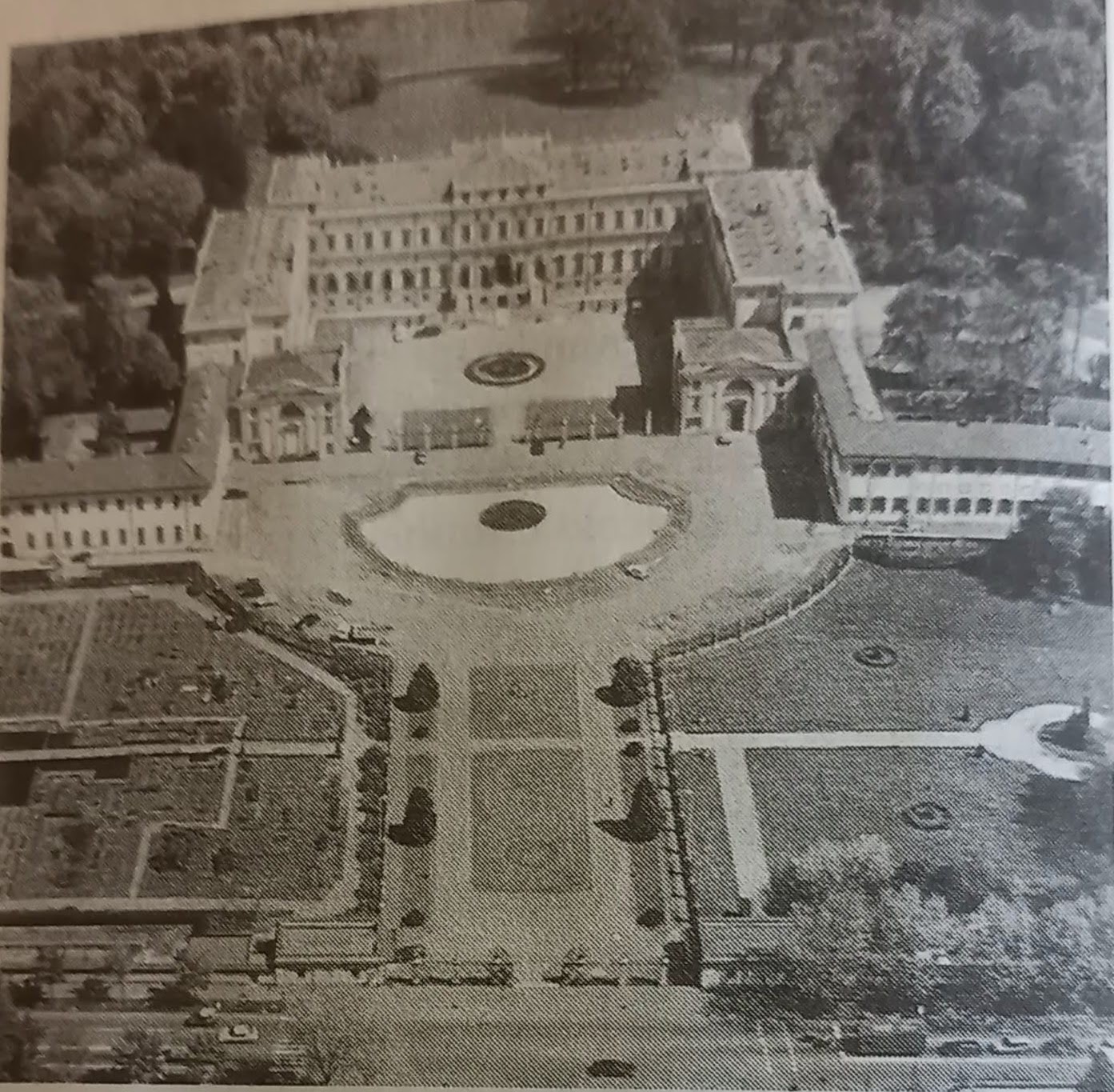
In the last quarter of the 19th century, a new era began for Lissone, when Empress Maria Theresa of Austria commissioned the architect Giuseppe Piermarini to build the Villa Reale di Monza (1777-1780), a short distance from its border, as the summer residence of Archduke Ferdinand of Austria.
For the construction of the Villa Reale, much of the required workforce was recruited from among the inhabitants of Lissone, who, while working, grasped the basic concepts of woodworking, putting to good use that ability to learn and exploit new opportunities demonstrated over the centuries, opening individual businesses in the sector in Lissone which would later prove useful in the renovation of the Parish Church (1794-1800).
This opportunity was expanded under the successor of the Empress, who died in 1780, Joseph II, who in the same year decreed the abolition of the guilds, including that of the "legnamari" (woodworkers), thus promoting the development of craftsmanship.
By 1800, Lissone had become a centre of some importance in the wood sector, as certified by the reports of 1803 by Melchiorre Gioia in "Discussione economica del dipartimento dell'Olona". Regarding the wood sector, he wrote: "our wood manufacturing, more than in other parts of Italy, combines the exactness of proportions, the elegance of forms, the lightness of mass and the naturalness of figures" and noted Lissone "as one of the points of the department where the greatest traces of trade can be seen", and by Zaninelli who reported "from the report of the chancellor of Celso of the thirteenth district to the prefect of Olona": in Lissone 44 families practised the carpenter's trade, 68 people in manufacturing used only carpenter's tools (from "Studi e Ricerche nell'aria del Mobile" pp. 115-116 ed. 1985 tip. Meroni).
The events following the French Revolution also involved Lombardy and northern Italy. The Cisalpine Republic was born, which then took the name of the Italian Republic with Napoleon Bonaparte as president. In place of the Austrians, the French installed themselves, and in 1805 Napoleon Bonaparte was crowned King of Italy.
He appointed Eugène de Beauharnais as his Viceroy, who resided at the Villa Reale in Monza, tasking him with providing it with a large park.
The commission was given to the architect Luigi Canonica, who enlisted the collaboration of Luigi Villoresi, and they completed its construction in 1810. Beauharnais Eugène was in Lissone several times during that period as a guest of the Battaglia family (from Lissonum), and it is therefore possible that he had contacts regarding local activities, both for labour and possible supplies.
With the armistice of Waterloo in 1815, the French departed and the Austrians returned. The wood sector in Lissone acquired during that period important knowledge and technologies of French culture, which were essential for training more specialised workers.
In the following decades, many families saw one or two of their members devote their time to carpentry work, and thus furniture-making Lissone was born.
Villa Reale di Monza
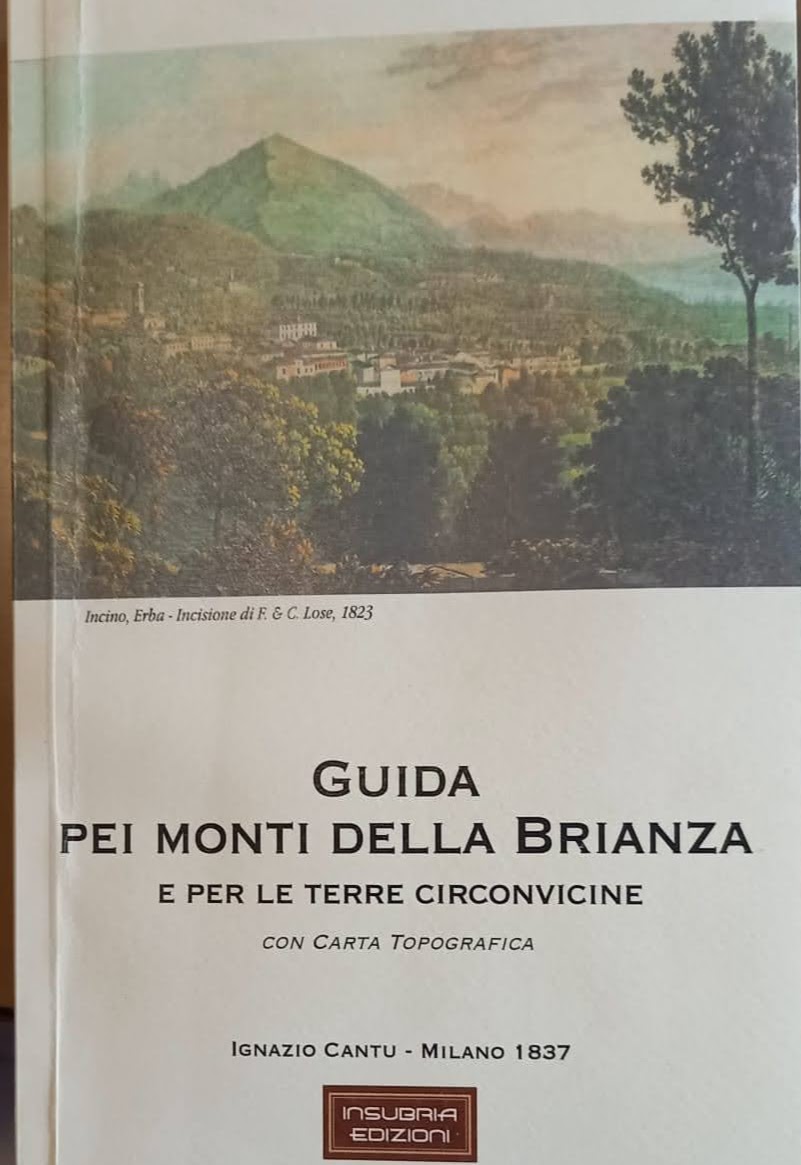
Ignazio Cantù in 1837 wrote the first tourist guide to Brianza, in which he describes the castles, churches and Romanesque basilicas and the sumptuous villas set in the characteristic landscape of Brianza. On the last page, after having described Villa Traversi (formerly Cusani), before moving on to Muggiò — where the autumn villa of the Barnabites of Monza is located — and ending the journey in Monza where one started, he writes: "Heading towards Monza, we shall need to leave the main road if we wish to go to Lissone, a large and populous cluster of houses of very decent appearance, full of peasant bustle that makes a fine contrast with the indolence of so many hamlets of lower Lombardy".
These are words that stand out from the context of the other pages of the guide and suggest that Cantù is inviting visitors to pass through Lissone, where they will immediately notice in its inhabitants their industriousness and the dynamism that is intrinsic to the population living in Brianza; above all, without mentioning a Lissone that he sees in continuous evolution, his guide would seem incomplete to him.
Guide to the mountains of Brianza and the surrounding lands. Ignazio Cantù - Milan 1837
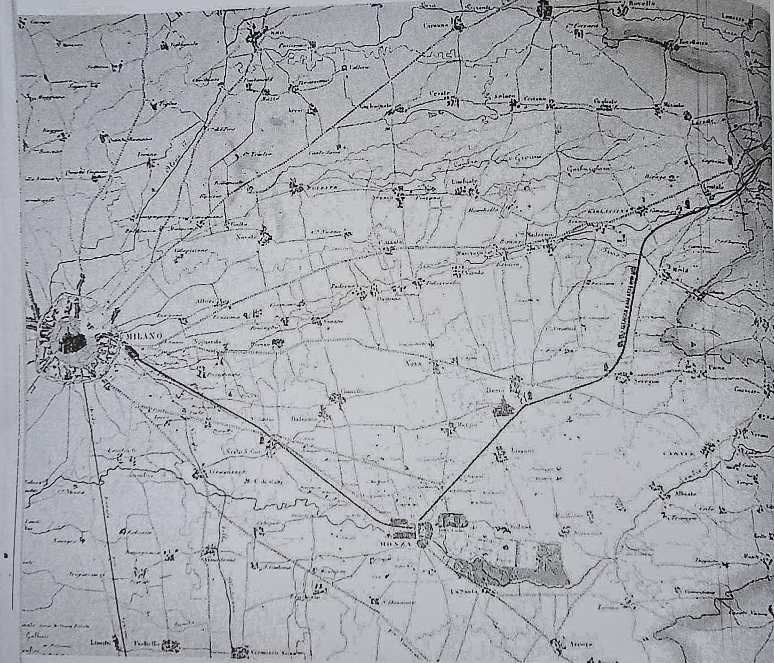
On 7 December 1849, the Monza-Como railway line was inaugurated, stopping at Camerlata, the first station after Monza and Desio, with the tourist attraction of Villa Traversi (formerly Cusani). The completion to the shore of Lake Como took place in 1875. Lissone, which was constantly expanding its activities, applied for its own station with a goods yard. The proximity to the stations of Monza and Desio seemed an insurmountable obstacle, given that along the entire route there were four stations at proper distances from each other.
In 1878, the evening school of drawing and cutting was established. Lissone's insistence on having its own station was constant, supported by data on railway traffic pertaining to its territory, which was continuously increasing, and finally accompanied by a project and a sum for its construction as a non-refundable contribution.
In 1881, the request was finally granted, and on 6 July 1881, the administration of the railways of Upper Italy informed the municipality, with the condition that work would begin only when the offered sum had been delivered. On 10 July, at a meeting specially convened by the municipality with the entrepreneurs, the sum of L. 3,775 was collected and immediately paid to the treasury of the administration of the railways of Upper Italy.
In 1882, the station and the goods yard came into operation. For Lissone's economy, it was an important and fundamental factor for its further development.
N.B. The curve of the route leaving Lissone towards Desio suggests that the original route was modified to allow the station to be built near the production sites.
Map of the Railway from Milan to Como, c. 1849 (Civica Raccolta Stampe Bertarelli, Milan).
In the mid-1800s, the industrial era began; in Lissone, the first large furniture factories were established. In reality, while having their own production, they collected almost entirely furniture produced individually and manually by the small workshops that had sprung up mixed in with the residences — furniture that previously had been taken to the Milan market for sale.
The enterprise, skills and foresight of the entrepreneurs of that era immediately grasped the epochal changes that industrialisation was bringing to the population, and in building the factory premises, in addition to the halls for the construction and finishing of furniture — both their own products and those purchased from individual craftsmen — they reserved ample space in showrooms where the furniture produced and collected, rather than simply stored, was displayed to show it to customers.
Their location, concentrated about 3 km from the Villa Reale, near the route of the Monza-Como railway and the road connecting to Milan, was intended to intercept customers among the numerous visitors to the park and the Villa Reale, who had increased considerably with the recently inaugurated Milan-Monza railway link, and who came not only from Milan.
The wide assortment of furniture displayed in various styles led potential customers to choose the piece most suited to their preferences and needs, for their current or future homes. It can be said that this was the forerunner in Italy of the supermarket, focused on the philosophy of attracting the widest and most varied clientele, inducing the buyer to come and see and, consequently, choose the product in a space specially created for it: appealing and not displayed in a nondescript setting.
Until that period, individual pieces of furniture were presented to the public almost exclusively following the peasant philosophy and tradition, which, as was customary, involved bringing one's product to the city streets, outdoors, to the markets that, on specific days of the week, were held for every type of product.
The numerous workshops that sprang up in just a few decades and that produced not only rough and coarse products suggest that among the Lissone workforce employed in the construction of the Villa Reale and the park villas, there were those employed in manual labour and rough-hewing, and the more skilled in finishing. It is possible that some of them were sent to carry out work in Austria and France, where they became acquainted with the various styles — Louis XIV, Louis XV, Baroque, Rococo, Neoclassical and the emerging Chippendale — thus broadening their knowledge of furniture construction, learning new technologies and innovative designs which, once they returned, they passed on to their fellow citizens.
In the following decades, to continue having increasingly qualified workers, first a Sunday school was established (1874) and subsequently, in 1878, the School of Drawing and Carving.
In 1885, in the books that recall the historical events of that year, it is written: Brianza is pervaded by strikes and great peasant unrest that even involve Lissone, the most socially cohesive centre around the church, already strongly characterised by craftsmanship. In the subsequent municipal elections, what Renato Zangheri writes in "Agricoltura e contadini nella storia d'Italia" is reported: "In Lissone, once again the ballots were all written by agents, stewards, overseers, etc., and contained the names of the usual known privileged few. But the Lissonesi knew how to remove one to put in one of their own, on whom they had agreed".
The "even Lissone" reveals the astonishment in the writings of historians of the 1970s, as they considered the Lissonesi of that period, due to their strong bond with the clergy, to be "bigoted strikebreakers". A basic knowledge of the events that mark Lissone's history would have revealed to them that the bond linking the population of Lissone to the clergy was not only religious. The clergy's commitment was directed towards social welfare, helping those in need, but above all educating the population, making them aware that alongside duties there were also their rights, which they had to defend. This is already evident in the events of 1613, but is clear from what happened in the early years of the 20th century.
In 1901, within the Catholic sphere, steps were taken to create the conditions for founding the Catholic Labour League, which defended workers' rights and was already operating when its statute received the approval of the Cardinal of Milan on 13 June 1905. In 1908, within this league, the cooperative of artisan carpenters was born for the purchase of timber and the sale of furniture. By 1909 it had about 350 members.
In the same decade, the Monza labour chamber attempted to create a branch of its own in Lissone as a secular alternative, both in 1902 and during and after the turners' strikes of 1907 and the marble workers' strike of 1911, which lasted more than two months. However, it only managed to gather a few members, which decreased in subsequent years, making it impossible to keep a branch open. All this suggests that the Catholic Labour League offered more opportunities and assistance.
Beginning of the 20th century
The importance of Lissone in the wood sector is verified by the data in the book "L'industria del mobile in Brianza" of September 1904. The data on railway traffic at Lissone station from 1 January to 15 December 1901 show:
Full wagons arriving: 1,525 for 179,315 quintals
Full wagons departing: 1,787 for 33,243 quintals
Shipments arriving at low speed: 2,725, at high speed: 1,586
Shipments departing at low speed: 6,935, at high speed: 2,380
Considering that the annual working days are 300, one can appreciate the enormous daily workload revolving around Lissone station. On the same page it is written that in April 1903, 14,501 kg of furniture departed from Seregno station. Multiplying this by 12 months means that from Seregno that year approximately 174,000 kg of furniture may have departed, i.e. 1,740 quintals, just over 5% of the quintals of goods that departed from Lissone.
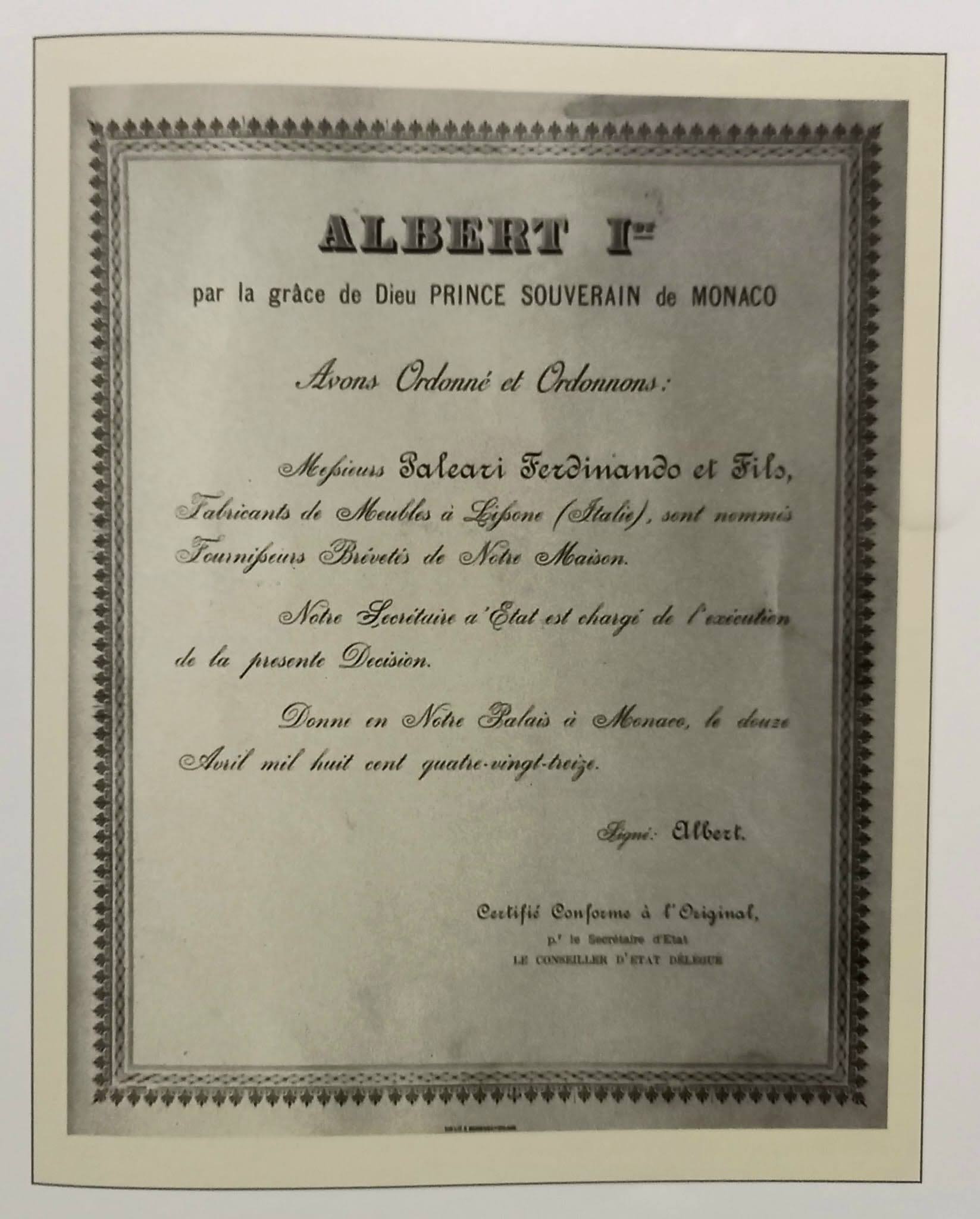
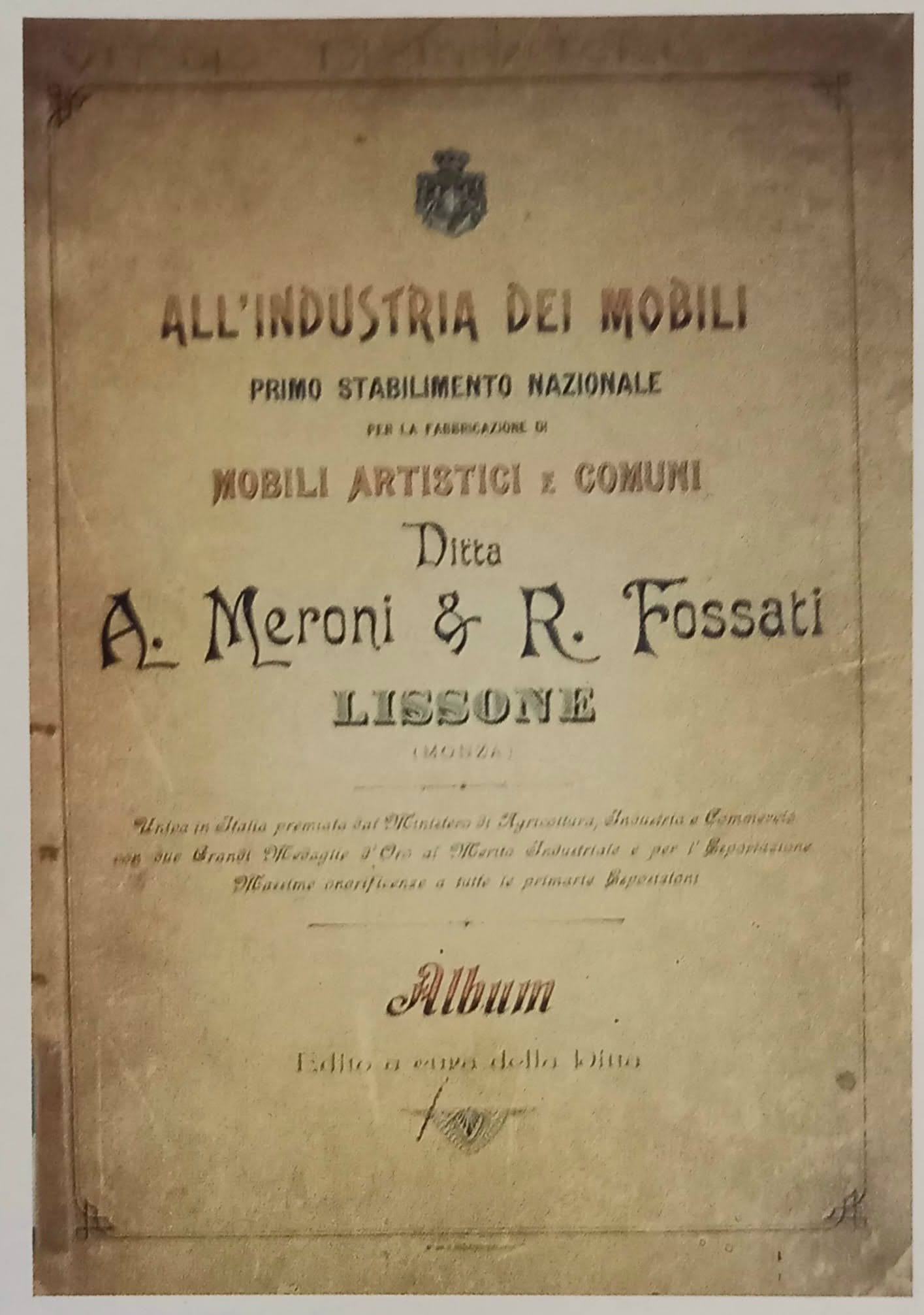
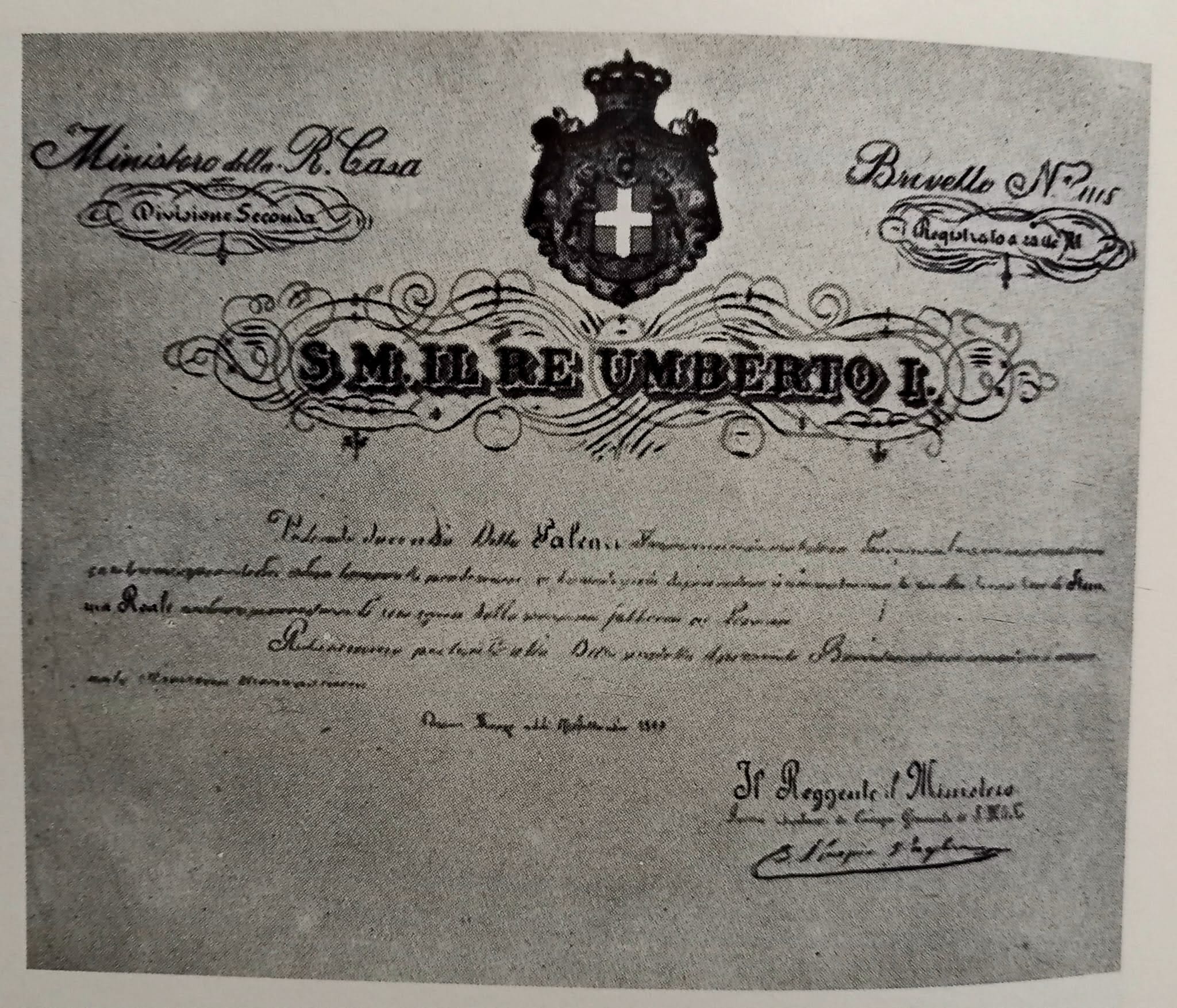
In the same book on page 21 it is reported that in Lissone there were three large dealers and about twenty secondary ones, in Cantù one large and three secondary, in Meda about twenty and in Seregno about fifteen. The three large dealers were Ferdinando Paleari, A. Meroni e R. Fossati, and Fatti Massimiliano.
On page 26, data from the labour office of the Società Umanitaria on annual Italian furniture exports are reported. In 1900 they amounted to L. 8,282,010. The municipality of Lissone alone had an annual production of L. 1,435,000, the municipality of Desio L. 12,000, the municipality of Seveso about L. 200,000. The enormous difference in the values of Lissone's production compared to neighbouring municipalities is evident (data from "L'industria del Mobile in Brianza", from the Labour Office of the Società Umanitaria p. 24, September 1904). It should be noted that Lissone is the most important centre in Brianza for the arrival and departure of timber and furniture.
Lissone enters the global furniture market
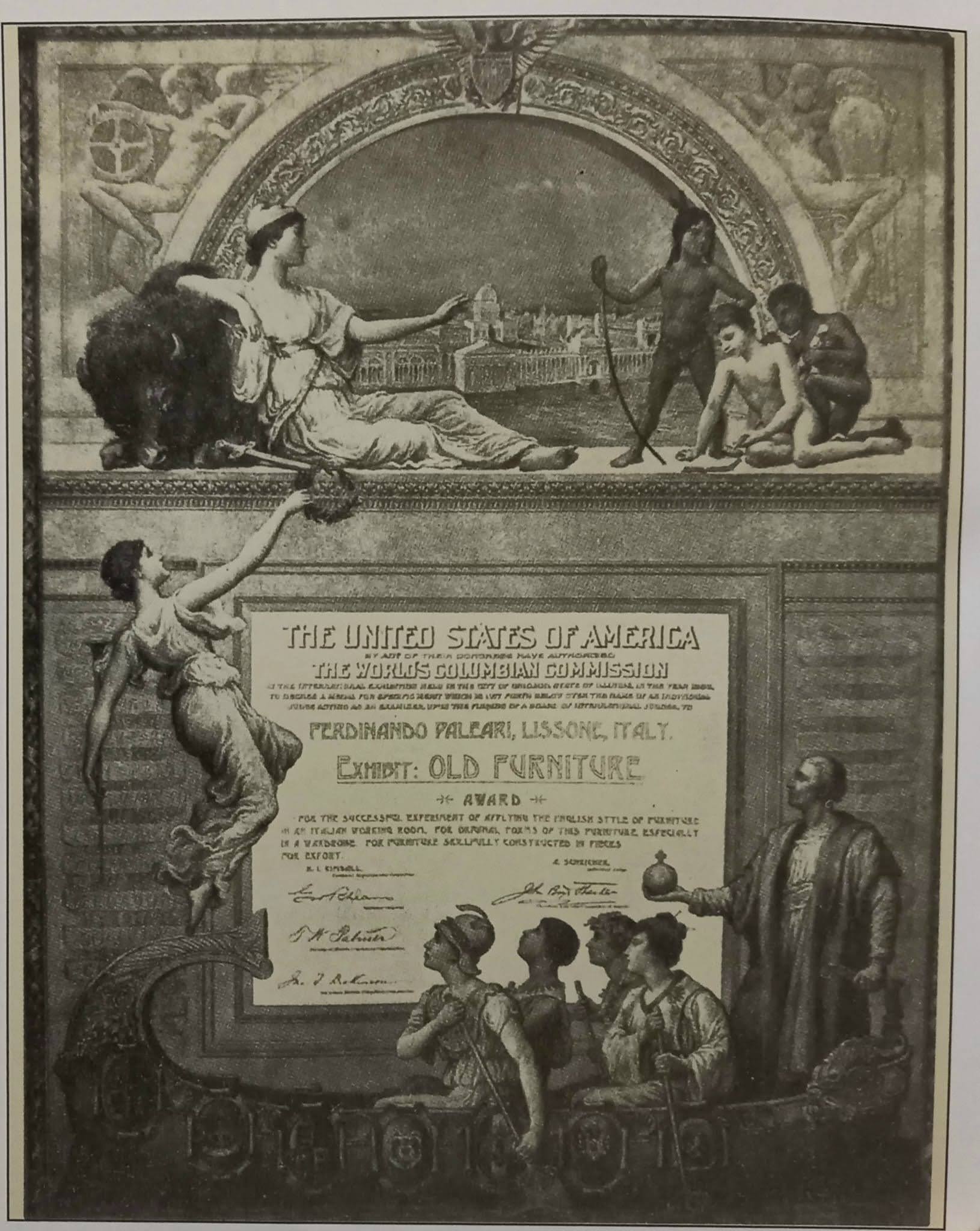
At the end of the 19th and beginning of the 20th century, Lissone's reputation had crossed national borders: the participation of Lissone companies in fairs and exhibitions in Europe and the United States did not go unnoticed, as evidenced by the various awards received for the furniture presented.
An important part of Lissone's furniture-making heritage is undoubtedly attributable to the education that trained highly qualified craftsmen. The school of drawing and carving and its teachers received commendations from the authorities on several occasions and gained well-deserved recognition in 1906 during the Milan International Exhibition, organised on the occasion of the inauguration of the Simplon Tunnel. The evening school of drawing and carving and the Lissonese Dassi Ignazio were awarded a diploma and medal.
Production was not directed solely at the needs of individual buyers: with a vision that was certainly innovative for that period, orders for furnishing large hotels with more than 100 rooms were fulfilled.
The order was subdivided by individual item, which was given to a workshop for production; thus dozens of workshops worked to fulfil the commission. Some made beds, others bedside tables, others the chest of drawers, others the wardrobe, others the mirrors, others the armchairs, etc. In this way, specialised workshops were created that over time increased their experience and improved their products.
It is in this context that Luterma, one of the largest sawmills in Europe and a producer of tables and chairs, based in Tallinn, Estonia, between 1907 and 1908, in order to expand its sales market in Europe, opened branches in several European capitals. In Italy, it chose Lissone, partnering with De Capitani.
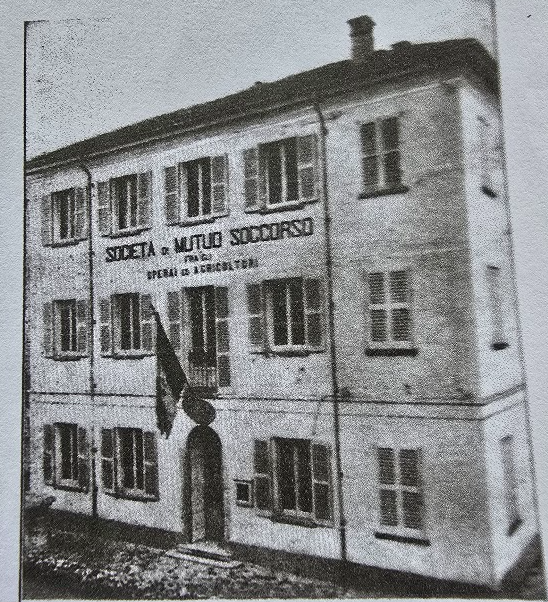
Old building for the Society and the school of drawing and carving, 1898.
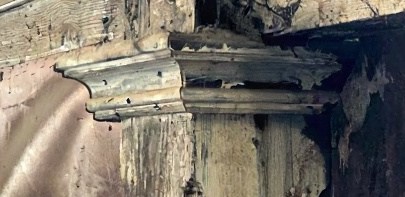
The capital in a portico of one of Luterma's production sites at Via Magenta 10, Lissone, is the only surviving evidence of Luterma in Lissone. Never mentioned in documents during the Fascist era, while in books and theses from the 1970s onwards the name, the city of its headquarters and the country are often given incorrectly.
Luterma - Estonian Plywood Furniture Company
Source: Oxford A Dictionary of Modern Design (1st ed.) - Jonathan M. Woodham Note: Original English text.
This well-known Estonian plywood furniture company was founded in 1883 and by the end of the century had become the largest manufacturer of plywood and furniture in Russia. Luterma (the A. M. Luther Mechanical Woodworking Factory) was renowned for its high-quality plywood, which was used for the production of suitcases and buckets as well as furniture. The company's earliest furniture types included office and railway furniture alongside domestic designs.
In 1908 Luterma established a sister company in London, the Venesta Plywood Company (the name Venesta deriving from Veneer and Estonia), its international outlook being supported by the establishment of branches in many European countries including Germany, Sweden, France and Italy. By 1914 much of its production reflected a direct functionalism although there were occasional examples of striking innovation as in the sculptured, flowing forms of a 1908 screen (Model No. 1138) that anticipated developments in Finland by Alvar Aalto and Artek.
With the closure of Russian markets after the First World War, Luterma played an important economic and social role in furniture production, a significant quantity of which was oriented towards utilitarian and everyday types. Before the First World War Luterma boasted one of the largest furniture departments in the Baltic countries, producing folding chairs and tables for the British market alongside domestic, public and office furniture for Baltic markets.
With the considerable expansion and industrialisation of Tallinn there arose the need to produce a new range of furniture that was suited to the rapid growth in the provision of rationally planned flats and housing designed to cater for the expanding working class. Luterma had begun to develop its interest in this area by organising a competition in 1919 for well-designed, economical wooden furniture for small apartments. Alongside such initiatives Luterma converted its Tallinn warehouse into a modern showroom for a wide display of domestic and office furniture.
By the mid-1930s the company promoted a "Furniture for Everyone" initiative supported by the Ministry of Economics, producing flexible modern designs using standardised forms with interchangeable modular units that could be combined in different ways. Such designs embraced the principles of Modernism and an empathy with the design aesthetic of the existenzminimum ("living in minimum space") that had been explored elsewhere in avant-garde circles in Europe — in Vienna, Warsaw, Frankfurt, Stuttgart and other cities involved in progressive large-scale housing programmes.
In Britain, Jack Pritchard, who worked for the Venesta Plywood Company, Luterma's sister company, was involved with the architect Wells Coates in the design of the "minimum apartments" at Lawn Road, Hampstead (1932), and in the Isokon plywood furniture designed by Walter Gropius and Marcel Breuer. Luterma's equally adventurous, but less publicised, policy continued until 1940 when Estonia was annexed by the Soviet Union.
N.B. By consolidating with De Capitani, in Lissone it acquired new knowledge in the design and construction of furniture for that ever-growing part of the European population that in those years had achieved a certain level of prosperity.
Its furniture production sector went from secondary to primary. Through this collaboration, Lissone became Italy's most important centre, first for plywood and then for the processing and production of composite materials.
Leading industries will emerge at national and European level in 1920: Alecta arises in the early 1930s for plywood and timber, while SIMPLES, using new adhesives in the 1950s, produces items with technological qualities superior to those made from ferrous materials. Incisa, which in the 1950s, through the intuition of its engineers, by recovering processing waste and reducing it into chips, creates the Novopan panel. With the same philosophy, years later, on the other side of the world in California, Armin Elmendorf creates a chip panel with a rough finish, the “Waferboard” in 1963. Subsequently, to make it more resistant, manufacturers give the wood chips specific orientations, giving it the name OSB: Oriented Strand Board. The Novopan panel evolves: with smaller chips arranged in 3 layers, finer chips on the outside and coarser ones inside, the particleboard panel is created, which is currently widely used in furniture construction.
OSB has a global diffusion for use in packaging and in construction, where in Canada it is used in wooden houses, both for internal and external walls. OSB manufacturers filed the patent in 1965, but the invention of producing panels from wood chips is due to the engineers of Incisa who, with their intuition, gave life to the first form of recycling, transforming a waste material into a resource. Unfortunately, today it is ignored and forgotten.
 Italiano
 English