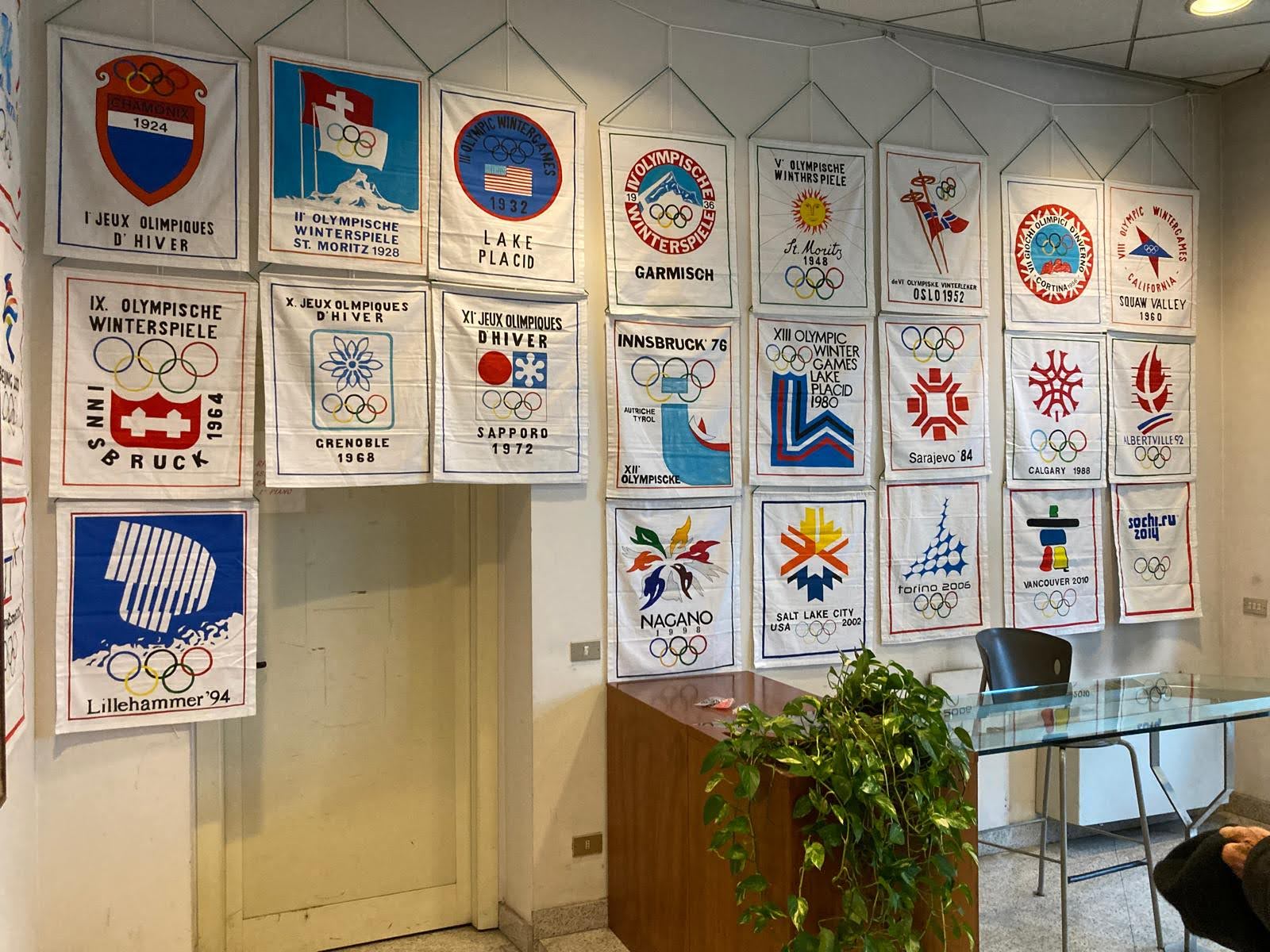
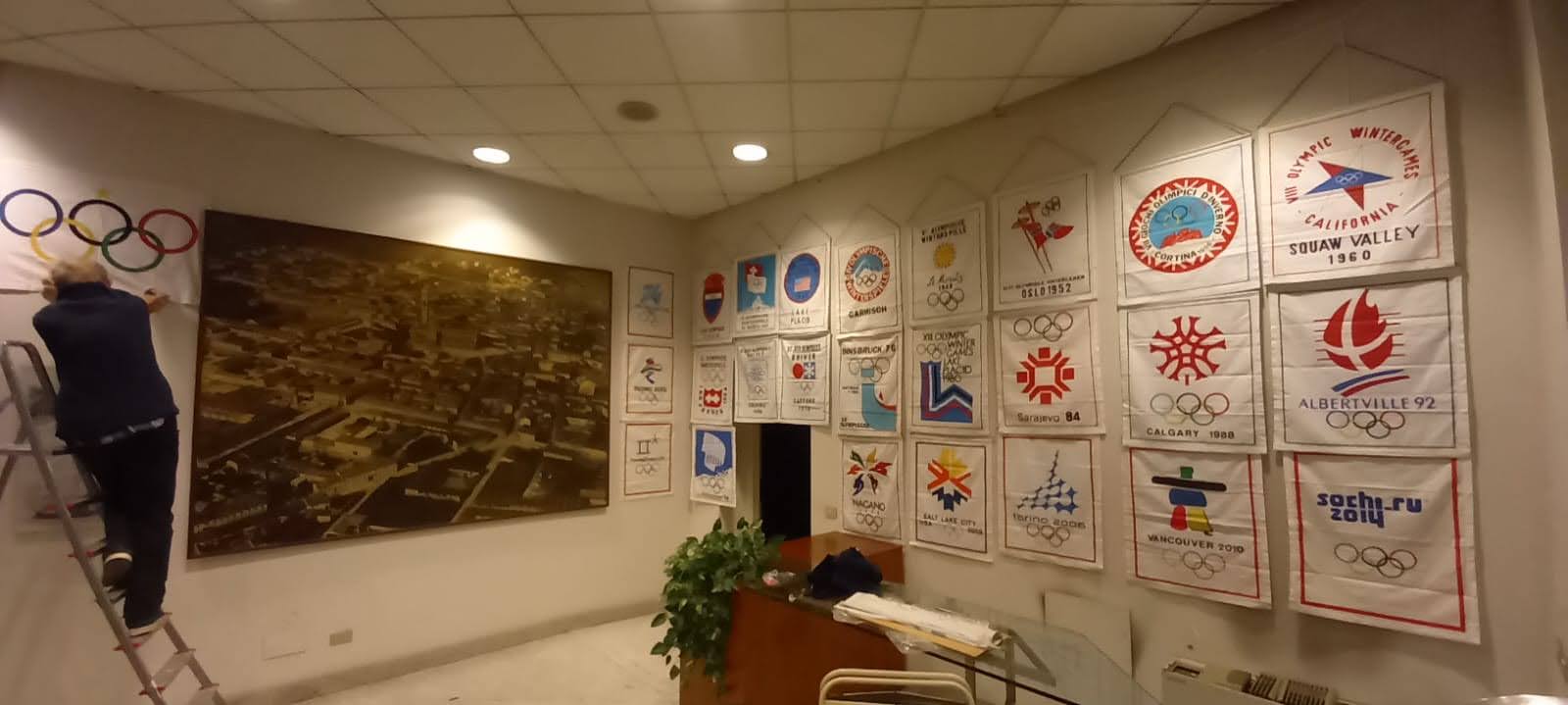
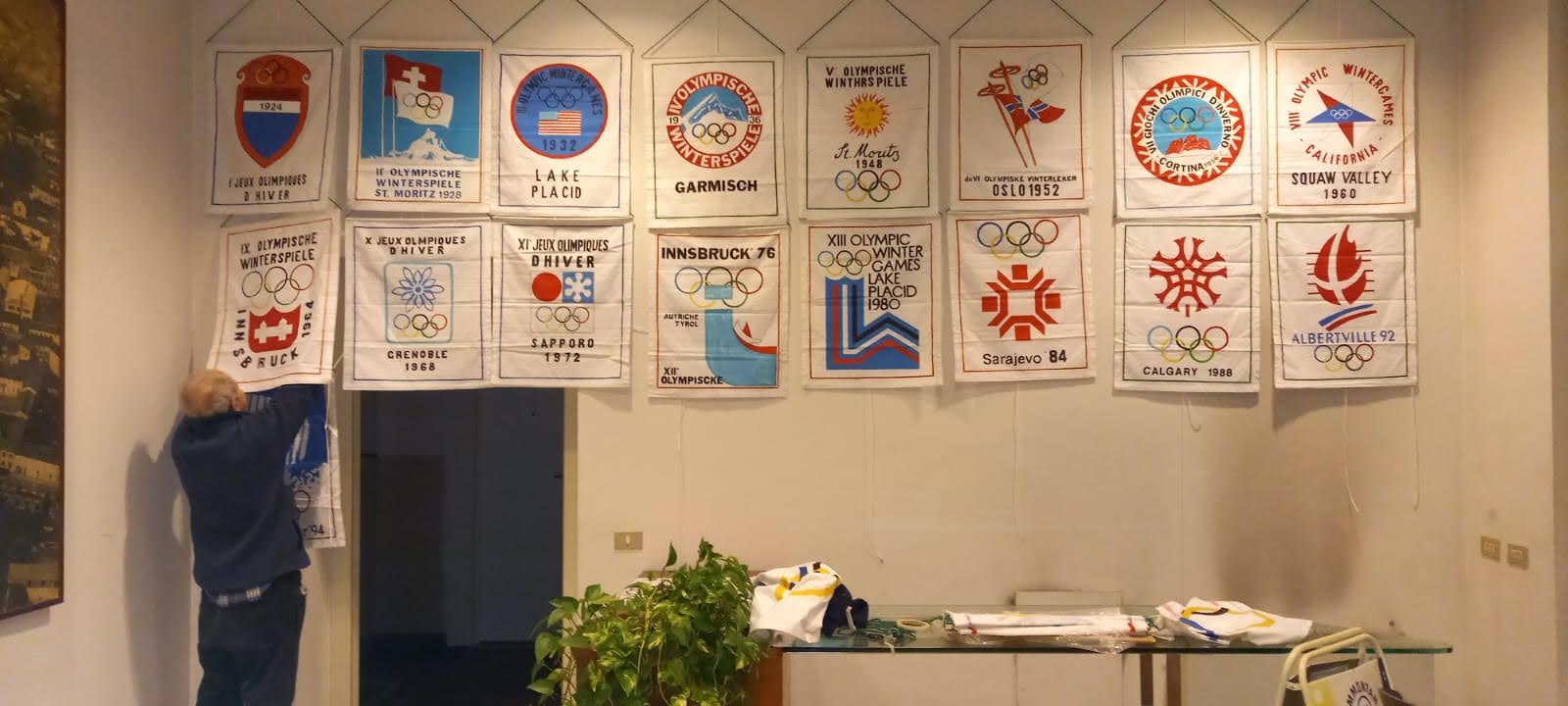
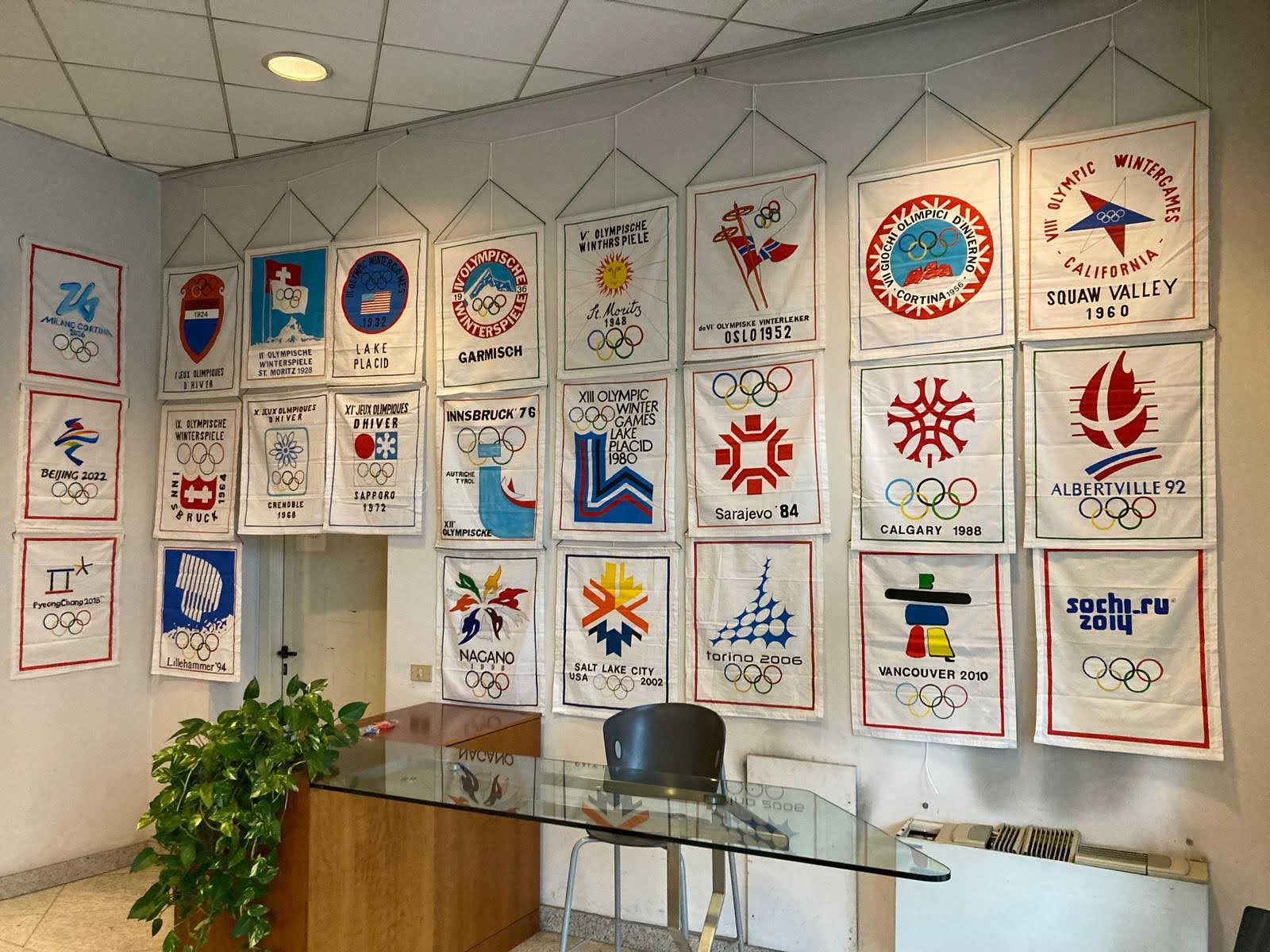
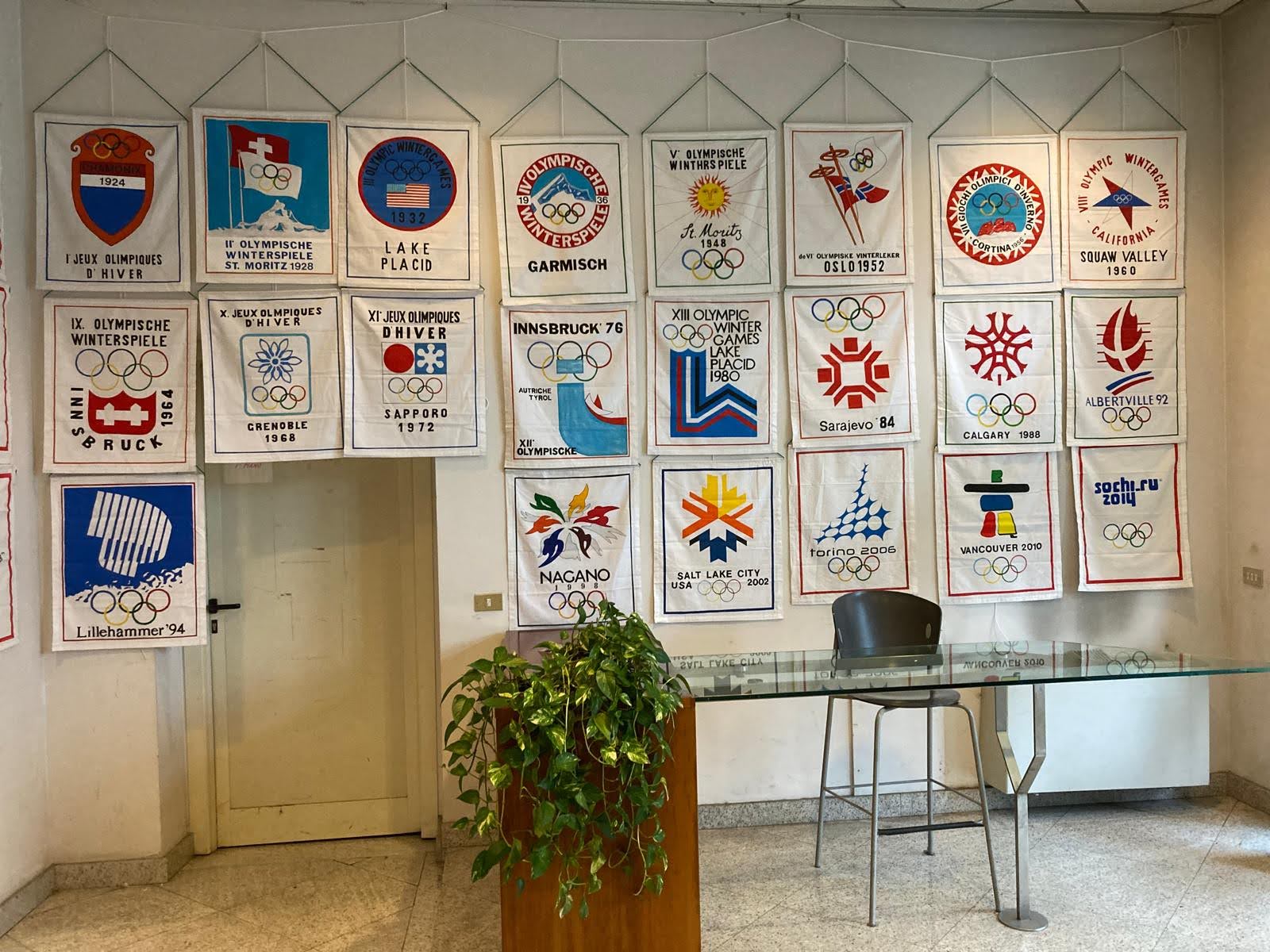
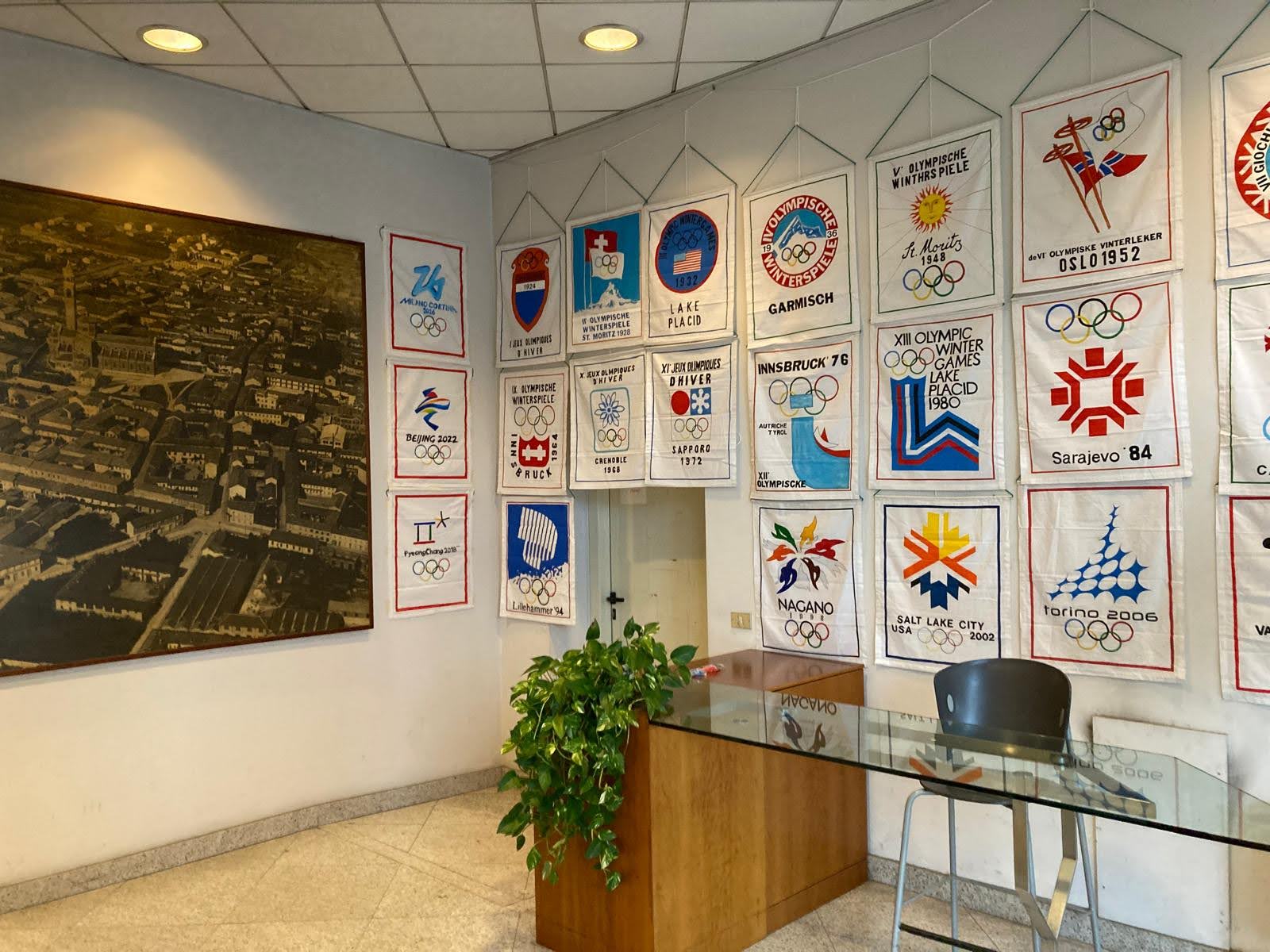
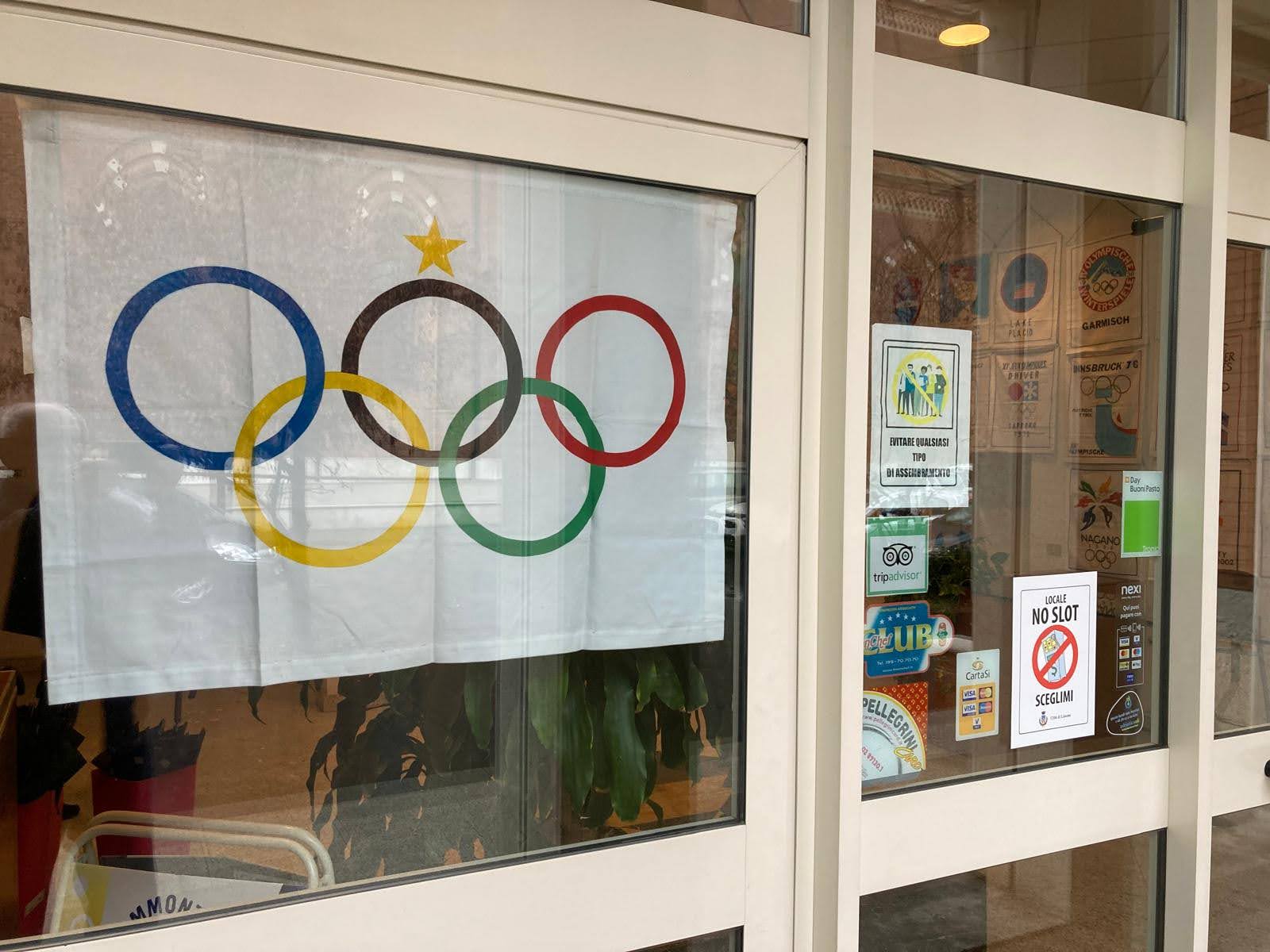
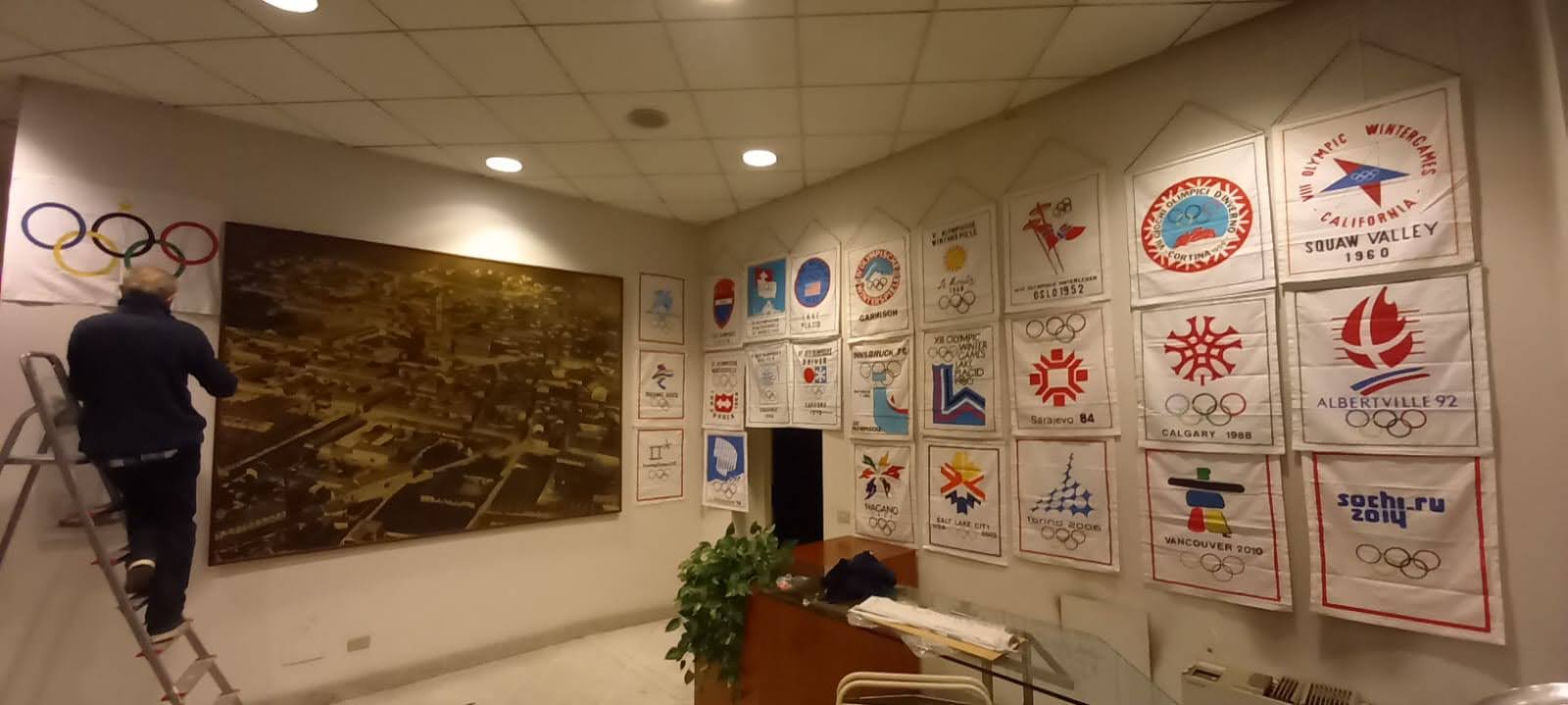
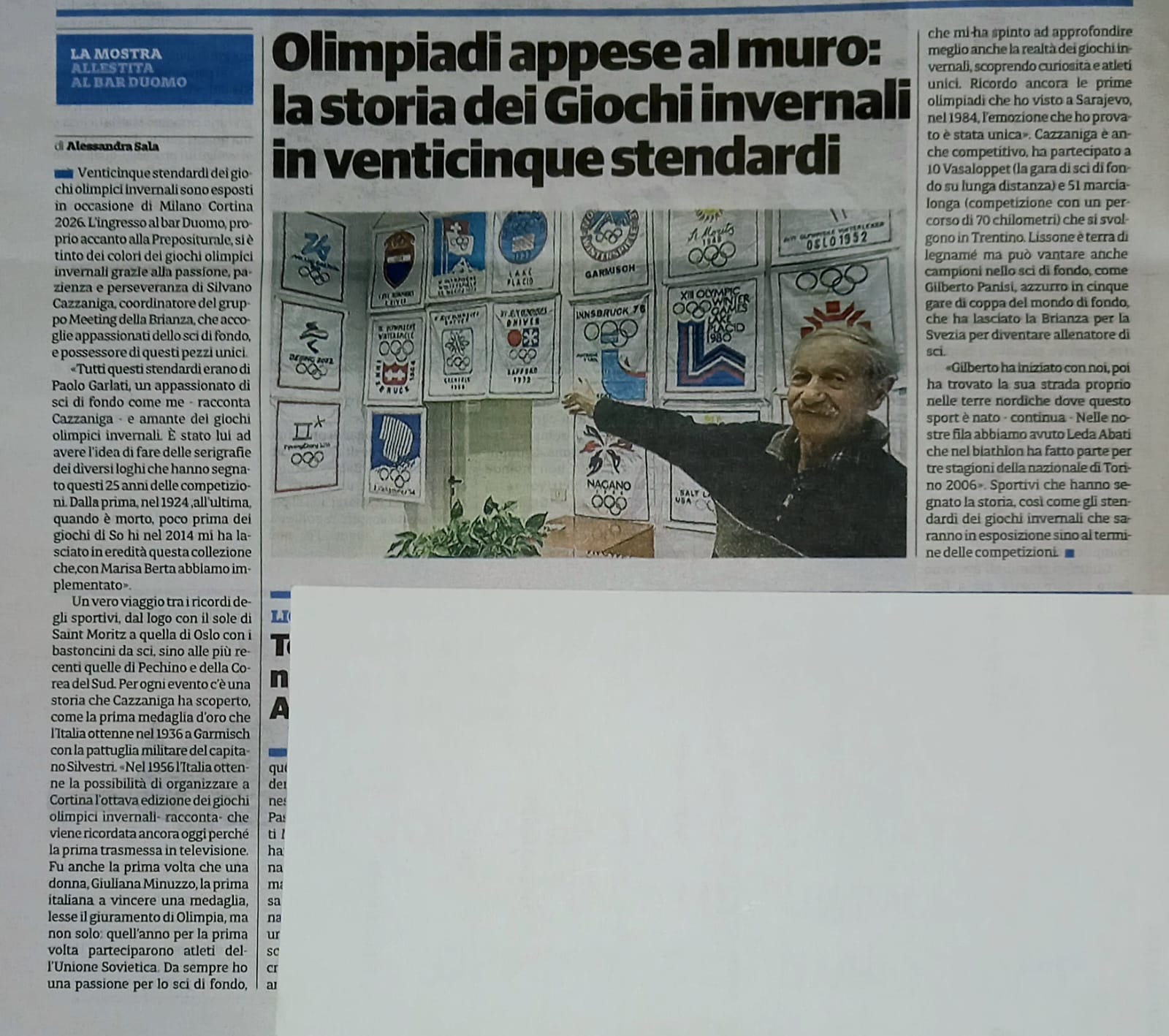
At the Bar Duomo in Lissone, in Piazza Giovanni XXIII (parish church), a room dedicated to the Winter Olympic Games has been set up with the banners and symbols of all XXV editions.
Making them known to Italians and especially to the citizens of Milan through the public service of Italian television should be both appropriate and a duty.
The Olympic torch passes through Lissone on Wednesday, 4 February.
The birth of the Winter Olympic Games was the result of a long journey, marked by obstacles and strong oppositions that initially seemed insurmountable.
They were not well received by the representatives of the International Ski Committee, founded in Oslo in 1910, with the aim of coordinating and regulating competitive skiing activities, while at the same time safeguarding the autonomy of winter sports.
In Sweden, starting in 1901, the Nordic Games were organised every four years on the initiative of Colonel Viktor Gustav Balck. These events had ski races as their central element, disciplines that had been taking place in the Telemark region of Norway since the early nineteenth century.
The International Olympic Committee also viewed the creation of an Olympic event dedicated to winter sports with suspicion. Most of its members, belonging almost exclusively to the aristocracy, feared the entry of people considered outsiders to their social environment.
Exceptions were the Italian Count Eugenio Brunetta d'Usseaux, Secretary General of the IOC from 1900, and some French representatives, including the Marquis de Polignac and the Count de Cléry. Thanks to their intervention, it became possible to include figure skating and ice hockey as "optional" sports in the Olympic programme.
On the occasion of the VIII Olympic Games in Paris in 1924, they also secured the organisation in Chamonix of an opening event called the International Winter Sports Week.
The great success of the event, which saw the participation of 16 nations and about 300 athletes, prompted the International Olympic Committee, during the Prague Congress of 1925, to officially recognise the importance of winter sports.
Consequently, the International Winter Sports Week at Chamonix was retroactively recognised as the first edition of the Winter Olympic Games, a designation that also satisfied the representatives of the Nordic countries, as it included the term Games rather than Olympiad.
Italy's first Winter Olympic gold medal was won in 1936 at Garmisch-Partenkirchen by the military patrol team, consisting of Captain Silvestri, Sergeant Perrone and the alpine soldiers Scilligo and Sertorelli.
During the winter season of 1940-1941, in the midst of World War II, with Germany organised an event in Cortina d'Ampezzo presented as a world championship and as Winter Olympic Games. However, this event was never officially recognised by either the International Olympic Committee or the International Ski Federation.
In 1956, Italy was awarded the organisation of the VIII Winter Olympic Games in Cortina d'Ampezzo. This edition is remembered as the first to be broadcast on television and as a moment of great international revival for Italian sport.
For the first time in the history of sport, an Italian woman won a gold medal at the Winter Olympic Games: Giuliana Minuzzo won the gold medal in alpine skiing, downhill speciality, and took the Olympic oath on behalf of all athletes.
At Cortina 1956, athletes from the Soviet Union also participated for the first time. The edition took place in a climate of relative serenity and sporting brotherhood, bringing together athletes belonging to very different political ideologies.
The only negative note was the exclusion of Italy's most representative athlete of the time, Zeno Colò, accused of professionalism and forced to light the Olympic cauldron with the Olympic flame, without being able to compete in the events.
In 1952, a new edition of the Winter Olympic Games was organised in Oslo, while in 1994, in Lillehammer, the Games were exceptionally scheduled only two years after those in Albertville 1992, following the IOC's decision to separate the Summer and Winter Olympics in time.
The Lillehammer 1994 edition took place in a small town about 200 kilometres from Oslo and is considered one of the best organised Winter Olympics ever. The opening ceremony was watched by hundreds of thousands of people and the event stood out for its attention to the environment and the enthusiasm of the public.
Among the most significant sporting results were the Italian victories of Debora Compagnoni in alpine skiing and Manuela Di Centa in cross-country skiing, as well as the successes of Alberto Tomba, which established Italy as one of the leading nations of the Games.
 Italiano
 English